
Coolant Is Disappearing but There Are No Visible Leaks: Possible Causes
In short: if the coolant level is dropping but the area under the car remains dry, the fluid may be leaking into the engine, entering the cabin, or evaporating. The most common causes are a faulty expansion tank cap, a leaking heater core, a blown cylinder head gasket, a cracked heat exchanger, or an EGR cooler leak on diesel engines. Normal coolant loss should be no more than a few dozen milliliters between scheduled services. If you need to top it up more often than once every 1–2 weeks, diagnostics are required.
Coolant is the fluid used in the engine cooling system to remove heat from the engine and prevent freezing in winter. The system operates under pressure of approximately 1–1.5 bar. Therefore, even a small leak can quickly cause coolant loss when the engine is hot.
How Much Coolant Loss Is Normal?
In a properly functioning cooling system, the level should remain almost unchanged. Slight fluctuations between a cold and hot engine are normal. Mark the coolant level on the expansion tank when the engine is cold and check it once a week.
If the level drops by 100 ml or more per week, there is already a leak. Do not wait until the engine temperature warning light comes on.
7 Reasons Why Coolant Disappears Without Visible Leaks
| Cause | Where the Coolant Goes | Typical Signs | Risk Level |
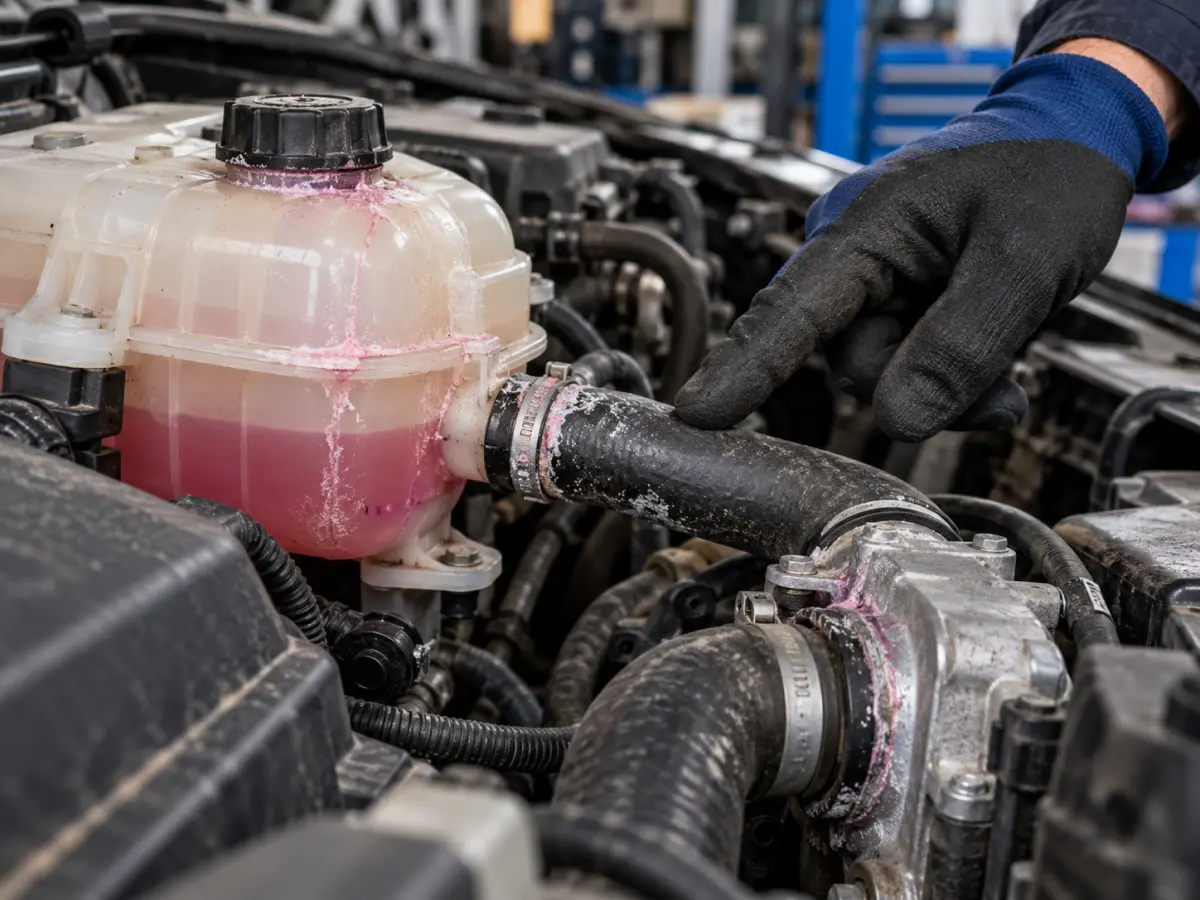
| Faulty expansion tank cap | Evaporates through the valve | White residue on the tank, sweet smell under the hood | Low, but may lead to overheating |
| Leak onto hot components | Evaporates from the engine block, water pump, or hoses | Dried coolant crystals near the pump, smell after driving | Medium |
| Heater core | Into the cabin | Fogged windows, sweet smell inside the cabin, wet carpet near the passenger’s feet | Medium, vapors may be harmful |
| Cylinder head gasket | Into the cylinders or engine oil | Thick white smoke, bubbles in the expansion tank, hard hoses, «mayonnaise-like» residue under the oil cap | High |
| Cracked cylinder head or engine block | Into the cylinders or engine oil | The same symptoms, often after engine overheating | Very high |
| Oil heat exchanger | Into the engine oil | Oil level rises, engine oil becomes lighter in color | High, may damage engine bearings |
| EGR cooler (diesel engines) | Into the intake and exhaust systems | White smoke, coolant level dropping without other obvious signs | High, risk of hydrolock |
Expansion Tank Cap
The valve inside the cap maintains pressure in the cooling system. If it becomes weak, the coolant may boil earlier and escape as vapor. This is one of the least expensive causes, so it is worth checking first.
Heater Core
A heater core leak is often mistaken for ordinary moisture in winter. If the windows fog up from the inside and there is a sweet smell in the cabin, check the carpets. On some vehicles, repairing the heater core requires removing the dashboard.
Cylinder Head Gasket
A damaged cylinder head gasket can allow coolant to enter the combustion chamber or mix with the engine oil. At the same time, exhaust gases may enter the cooling system. This causes bubbles in the expansion tank and hard, «swollen» hoses when the engine is warm.
A head gasket often fails after the engine has overheated. We have explained the common causes of engine overheating in a separate article.
EGR Cooler on Diesel Engines
Many diesel engines from VW, BMW, Mercedes, and Ford use an exhaust gas cooler. If the cooler develops a crack, coolant may enter the intake manifold or exhaust system. Without proper diagnostics, this problem can easily be mistaken for a failed cylinder head gasket.
Signs That Coolant Is Entering the Engine
- thick white smoke with a sweet smell, especially after startup;
- light-colored emulsion on the oil filler cap or dipstick;
- engine oil level rises without topping up;
- bubbles in the expansion tank while the engine is running;
- the engine misfires after being parked overnight because coolant has collected in a cylinder.
If you notice at least two of these signs, do not continue driving the vehicle. Coolant mixed with engine oil can damage crankshaft bearings within a few hundred kilometers.
How We Find Coolant Leaks at Autopark-Service
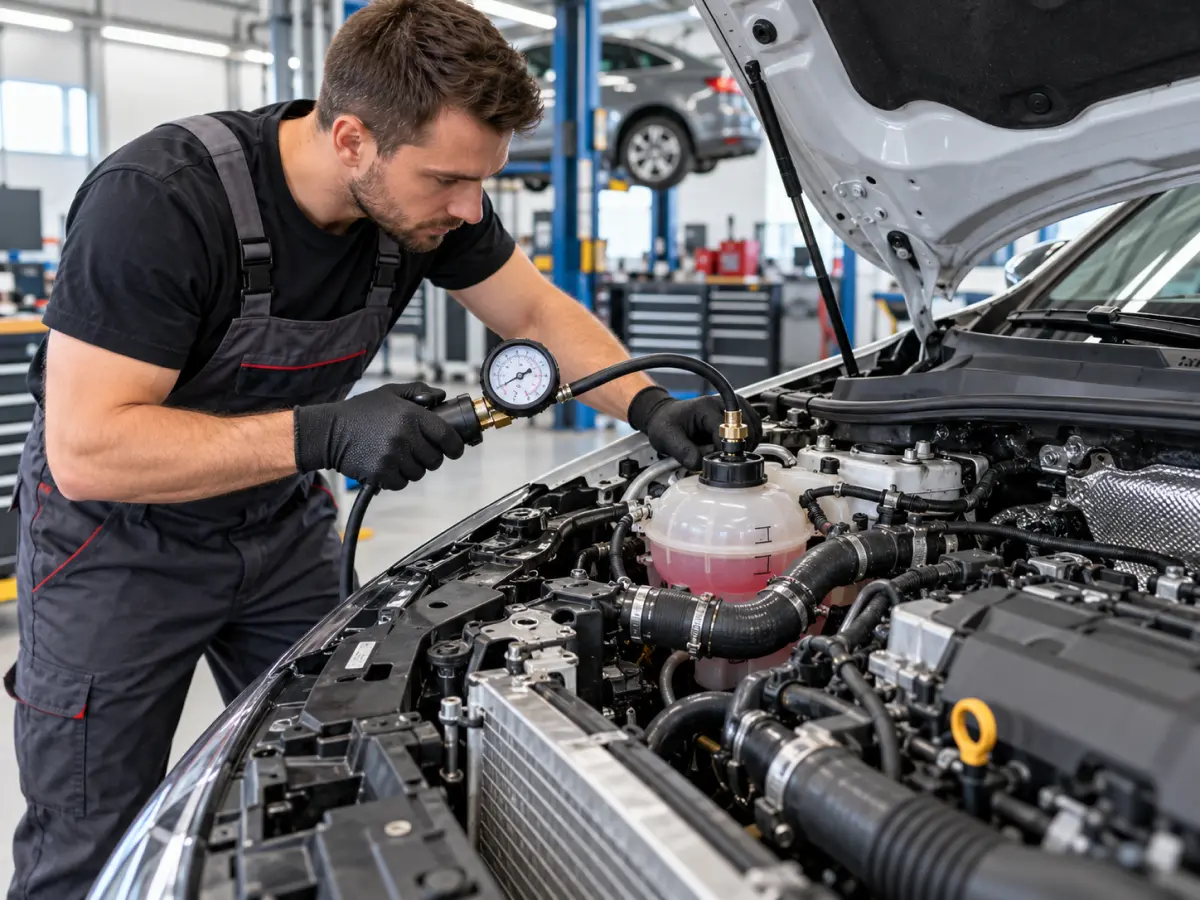
- We pressure-test the cooling system by applying operating pressure and checking where the pressure drops.
- We perform a CO2 test in the expansion tank. It detects exhaust gases in the coolant, which may indicate a failed head gasket or a cracked cylinder head.
- We add ultraviolet dye and use a UV lamp to locate the leak.
- We inspect the cylinders with an endoscope through the spark plug or injector openings.
- We test the expansion tank cap on a dedicated test bench.
This type of diagnostics usually takes from one to several hours. After the inspection, we identify the cause and provide the repair cost before any major disassembly begins.
What You Should Not Do
- Do not add water instead of coolant. In Lviv, water can freeze in winter and may damage the radiator or engine block.
- Do not mix different types of coolant without checking compatibility. Some combinations can form deposits.
- Do not add cooling system sealants. They can clog the narrow passages in the heater core and cylinder head.
- Do not open the expansion tank cap when the engine is hot. Pressurized coolant can cause serious burns.
Book a cooling system diagnostic in Lviv: +380 91 481 9004, 60 Kiltseva St. We are open 24/7. Learn more about our services on the maintenance and diagnostics page.
Frequently Asked Questions
Can I Drive If the Coolant Level Is Slowly Dropping?
Only for a short distance and only while closely monitoring the coolant level and engine temperature. Constantly topping up the coolant only hides a problem that may eventually cause the engine to overheat.
Why Is Coolant Disappearing from the Expansion Tank but There Are No Puddles Under the Car?
The most common causes are a faulty expansion tank cap, a leak onto hot engine components, or a heater core leak into the cabin. If these causes are ruled out, the cylinder head gasket should be checked.
How Can the Cylinder Head Gasket Be Checked Without Disassembling the Engine?
By performing a CO2 test in the expansion tank and pressure-testing the cooling system. Neither method requires removing the cylinder head.
How Much Does It Cost to Repair a Blown Cylinder Head Gasket?
The price depends on the engine and the condition of the cylinder head. After overheating, the cylinder head often needs to be checked for warping and resurfaced. We can provide the exact cost after diagnostics.
Read also: engine overheating: causes and what to do, oil stain under the car, what is included in an engine overhaul.