
Cloudy Headlights: Polishing or Replacement, and How Long the Results Last
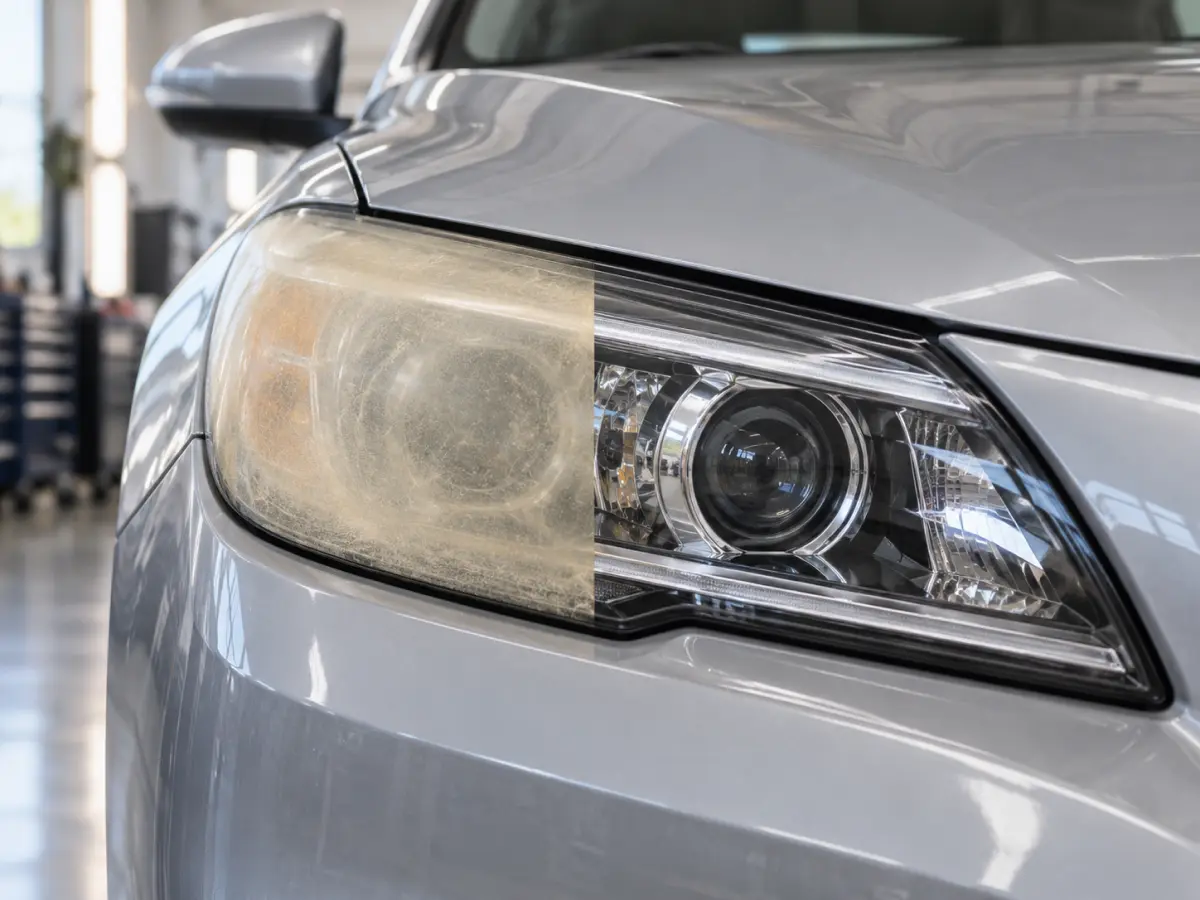
Cloudy, yellowed or scratched headlights are a problem even owners of relatively new cars run into. At first only the look of the headlights changes, but over time the driver may notice that the low beam has become weaker and that road markings and the roadside are harder to see at night. This is especially noticeable in rain, fog and on unlit roads.
Do cloudy headlights need to be replaced? In most cases, when only the outer layer of plastic is damaged, professional polishing is enough. It helps remove yellowing, haze and surface scratches. If the headlight has deep cracks, a damaged reflector or a faulty light module, repair or replacement may be needed.
Without UV protection, the results of polishing sometimes last only a few months. With a properly chosen UV coating, clarity can last around 1–3 years, depending on the materials, operating conditions and care.
Let’s look at how to assess the condition of car headlights, when restoring them makes more sense, and how to prevent them from clouding again.
Why car headlights turn cloudy and yellow
The outer lenses of most modern headlights are made of polycarbonate. It is strong, lightweight and impact-resistant, but it gradually ages under the influence of sunlight, road dust and temperature fluctuations.
From the factory, polycarbonate usually has a special protective coating. When it wears off, the plastic begins to oxidize, loses its clarity and takes on a characteristic yellowish tint.
The main causes of headlight clouding:
- Ultraviolet light. Solar radiation gradually breaks down the protective layer. This happens especially quickly if the car is always parked outdoors.
- Sand and road dust. Fine abrasive particles leave micro-scratches that make the surface look matte.
- Improper washing. Stiff brushes, dry rags and harsh car-care chemicals speed up the wear of the coating.
- Poor-quality previous polishing. If UV protection is not restored after the damaged layer is removed, the headlights can yellow again much faster.
The first visible signs of ageing sometimes appear after just 3–5 years of use. However, this is not a fixed period: on some cars the headlights stay clear for more than ten years, while on others they lose their look much sooner.
For cars driven daily in Lviv and the surrounding region, road dirt and sand are an additional factor, particularly after the winter season.
Headlight polishing or replacement: how to tell what your car needs
The main criterion is the nature and depth of the damage. Polishing removes defects on the outer surface but does not restore faulty components inside the headlight.
| Headlight condition | Recommended solution |
| Slight yellowing or haze | Polishing with protection |
| Fine scratches from sand | Restorative polishing |
| Heavy surface clouding | Multi-stage sanding and polishing, if the condition of the plastic allows |
| Deep cracks in the lens | Repair or replacement of the damaged part |
| Burnt-out reflector inside | Headlight repair or replacement |
| Headlight constantly fogs up | Check of sealing and ventilation |
| LED module not working | Diagnostics, repair or module replacement |
When headlight polishing really helps
Imagine a car that is 7–10 years old. Both headlights have yellowed, the surface has become rough, and washing does not restore clarity. At the same time, the housing is intact, there is no moisture inside, and the light modules work properly.
In this situation, replacing the entire headlight unit is usually not worthwhile. If only the outer layer of polycarbonate has degraded, it can be carefully removed, the surface polished and protection applied.
This is particularly relevant for cars with expensive original LED or matrix headlights, where a new unit can cost a significant amount.
When it is better to repair or replace a headlight
Another example: the lens is clear on the outside, but the headlight lights the road poorly. A darkened reflector or damaged light module is visible inside.
Polishing will not help here, because the cause of the weak light has nothing to do with the outer plastic.
Repair or replacement should also be considered if the headlight has a through crack, regularly collects water or was damaged in an accident. Sometimes it is enough to replace a single component rather than buy a complete headlight assembly.
Important: if your headlights have become dimmer but are still clear, don’t rush to book polishing. First, check the bulbs, LED modules, power supply and headlight aim.
How to tell surface clouding from damage inside the headlight
You can make an initial assessment yourself.
Wash and dry the headlight, then inspect it in daylight. If the yellowing and haze are on the outer surface and the plastic feels less smooth to the touch, it is most likely the protective layer that is damaged.
If the headlight looks clean on the outside but you can see stains, peeling reflector coating or water droplets inside, the problem may be internal.
Constant fogging also deserves separate attention. Minor temporary condensation sometimes forms because of temperature differences, but large droplets, pooled water and moisture that doesn’t clear for a long time may indicate a ventilation fault or a broken seal.
If the cause of poor lighting is unclear, it makes sense to book auto electrical diagnostics in Lviv. The check will help determine whether restoring the lens is enough or whether the lighting equipment needs work.
How long does headlight polishing last
On average, the effect of headlight polishing with proper UV protection can last around 1–3 years. If the plastic was polished without subsequent protection, clouding sometimes returns within a few months.
How long the result lasts depends on the restoration technique, the type of protective material and the operating conditions.
| Treatment method | Approximate duration of the result |
| Polishing without UV protection | From a few weeks to a few months |
| Polishing with a suitable UV coating | Roughly 1–3 years |
| Polishing with protective PPF film | Potentially several years, depending on the film and operating conditions |
These periods are not a guarantee. The durability of a specific protective coating should be judged by the manufacturer’s specifications and by whether the application process was followed correctly.
Why headlights cloud up quickly after polishing
The most common reason is the lack of proper UV protection.
Abrasive polishing removes not only the damaged plastic but also what remains of the factory protective layer. Afterwards, the surface may look perfectly clear, but it remains vulnerable to sunlight.
A few months later the headlights start to yellow again, even though they looked like new right after the procedure.
Other causes may include improper surface preparation, low-quality materials, an incompatible protective coating or a breach of the application process.
That is why, when ordering the service, it is important to ask not only about the price of polishing but also about what protection will be applied after restoration.
What to coat headlights with after polishing to keep them clear longer
After the damaged layer of polycarbonate is removed, its UV protection needs to be restored.
Several technologies are used for this.
Special UV coating. Designed to protect polycarbonate lenses from yellowing again. With proper surface preparation and correct application, it can provide a longer-lasting result than polishing without protection.
Protective polyurethane film (PPF). Creates an additional barrier against minor mechanical damage and external influences. For headlights, you should use an optically clear film that is suitable for this purpose and does not degrade the beam pattern.
Specialized protective formulas. Some products create an additional protective layer, but their effectiveness depends on their composition, UV resistance and compatibility with polycarbonate.
Regular automotive clear coat or general-purpose protective products should not be applied to headlights without checking compatibility. An unsuitable coating may yellow, peel or impair the optical properties of the lens over time.
How professional headlight polishing is done
The technique depends on the degree of damage. If the headlight has lost only a little of its clarity, gentle treatment may be enough. Severe yellowing requires multi-stage restoration.
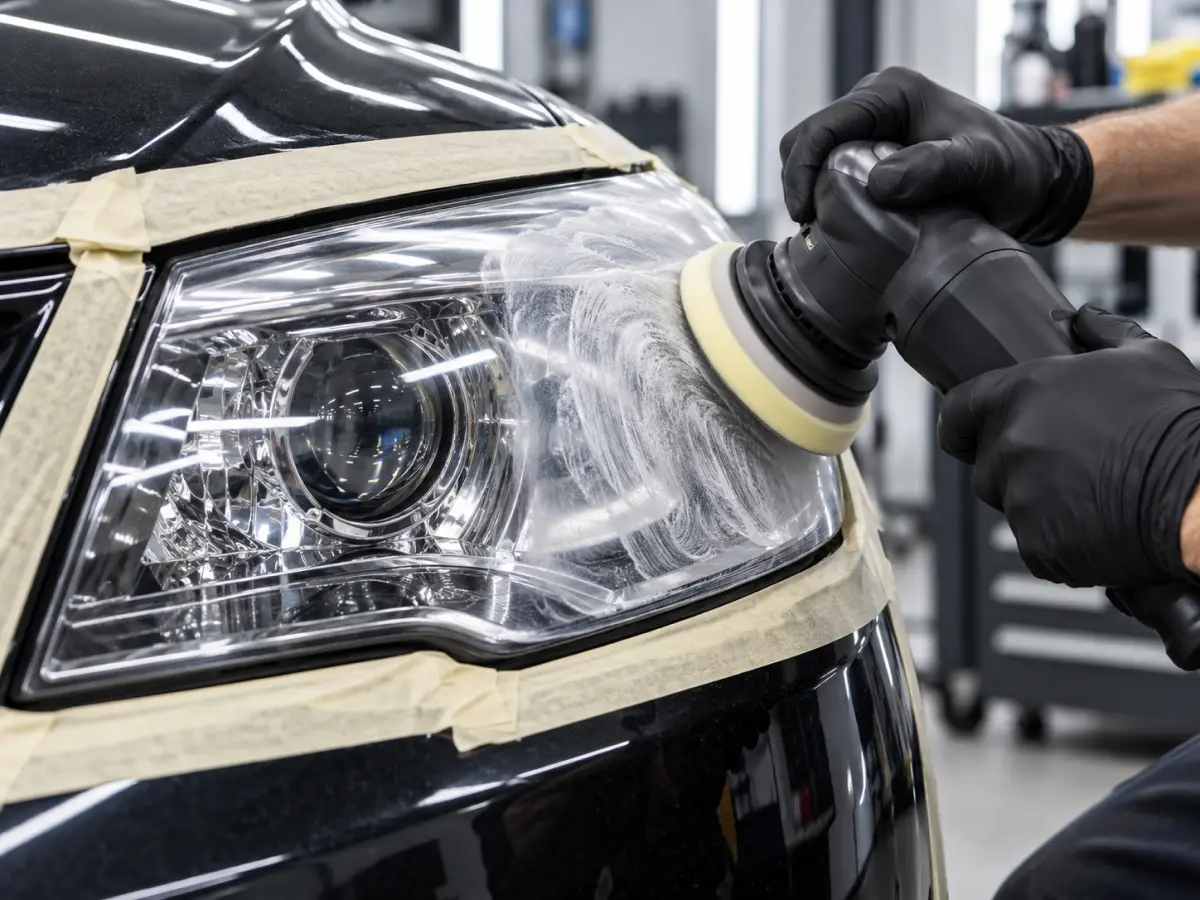
First, the technician inspects the headlights and determines whether there is any damage that polishing cannot remove. Then the surface is cleaned, and the adjacent body panels are protected from abrasives.
If the plastic is badly damaged, it is sanded step by step with progressively finer grits. This removes the degraded layer and levels the surface. The headlight is then polished until clear.
The final stage is preparing the surface for the protective coating and applying it, if the chosen technique includes this.
How long does it take to polish two headlights
As a rough guide, treating two headlights can take 1 to 3 hours, not counting the extended drying or curing time of some protective coatings.
If complex sanding, multi-layer protection or removal of the headlights is required, the job takes longer. The exact time is determined after inspection and choice of technique.
How many times can headlights be polished
There is no single permissible number of polishings. It all depends on how much material is removed during treatment and what condition the lens is in.
Light finishing polish and deep sanding are different procedures. Each abrasive treatment removes part of the surface layer, so repeated aggressive sanding can reduce the strength and optical properties of the plastic.
If a headlight has already been restored several times and quickly yellows again, the remaining condition of the material and the quality of the protection need to be assessed.
Repeat polishing should not be an automatic decision. Sometimes it is more sensible to restore the protective coating, and if the lens is significantly worn, to consider replacing the lens or the whole headlight.
Will the light be brighter after headlight polishing
If poor lighting was caused by clouding of the outer plastic, restoring clarity can significantly improve light transmission.
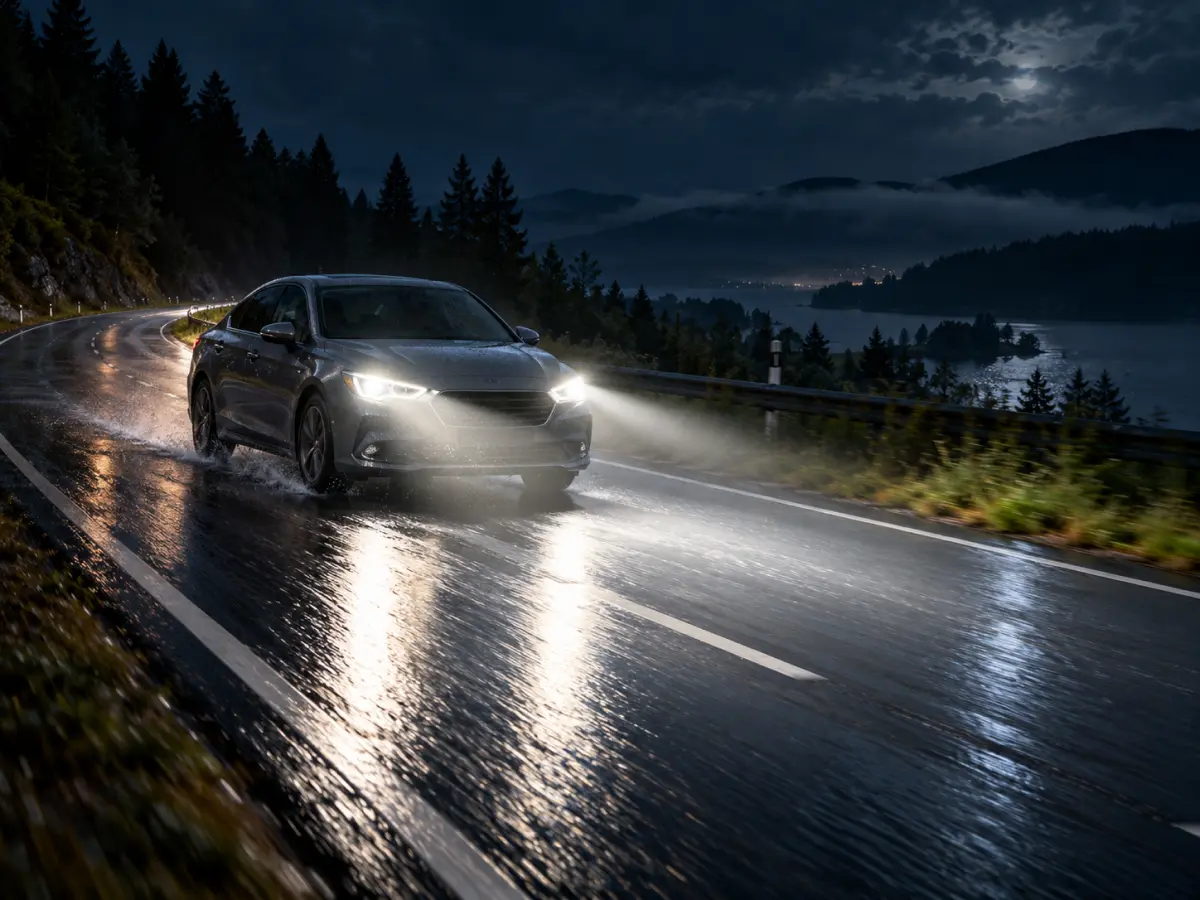
In a study by the American Automobile Association (AAA) published in 2018, badly degraded headlights in laboratory tests delivered roughly 22% of the light output of new original headlights. After professional restoration, this figure rose to roughly 73% in the samples tested.
These results do not mean that any polishing will improve the light by the same percentage. The effect depends on the design and initial condition of the headlights. Moreover, restoring clarity does not always bring back the factory beam pattern, and improper treatment can contribute to dazzling oncoming drivers.
After the work, it is worth checking how well the road is lit. External polishing itself usually does not change the mechanical aim of the headlights, so readjustment is not always necessary. However, if the light is pointed incorrectly or the cut-off line is disrupted, a check on special equipment is needed.
How much does headlight polishing cost in Lviv
The cost depends on the condition of the outer plastic, the depth of the scratches, how difficult access is and whether additional treatment is needed.
At the Autopark-Service car service centre in Lviv, headlight polishing costs from UAH 1,400 per headlight according to the published price list.
It is worth confirming the final price of the work and whether UV protection is included in the service before booking.
If the damage is limited to the outer surface, polishing is usually cheaper than replacing complete headlight assemblies. However, with deep cracks, faulty modules or significant internal wear, you need to compare the cost of repair with the cost of new components.
How to care for headlights after polishing
To keep restored headlights clear for longer, it is important not to damage the protective coating while caring for your car.
Don’t wipe sand or dust off the surface with a dry cloth. First wet the headlight and rinse off the dirt with water, then clean it with a soft sponge or microfibre cloth.
It is better to use car-care products compatible with polycarbonate and the applied coating. Harsh solvents and abrasive products can shorten its service life.
If the car is always parked in the sun, the protective layer may age faster. Where possible, use covered parking or a shaded spot.
You should also follow the washing and care recommendations for the specific UV coating or film that was applied.
Headlight polishing in Lviv at Autopark-Service
If your headlights have yellowed, turned matte or become covered with numerous scratches, you don’t necessarily have to spend money on new ones right away. First, it is worth checking whether the clarity of the outer lens can be restored.
At the Autopark-Service car service centre in Lviv, you can order car headlight polishing. The service helps remove surface haze and scratches if the condition of the headlights allows restoration.
The car service is located in the village of Solonka, at 60 Kiltseva Road (Ring Road), next to Lviv. The service centre is open 24/7.
For advice on the condition of your headlights, the cost of polishing and booking a service, call: +380 91 481 9004.
Frequently asked questions
Can yellowing be completely removed from headlights?
Yes, if the yellowing is caused by damage to the outer layer of polycarbonate. Sanding and polishing can substantially restore clarity. If the material is damaged deeper down or has micro-cracks, full restoration may not be possible.
Can LED and xenon headlights be polished?
Yes. The type of bulb or light module does not prevent polishing of the outer polycarbonate lens. However, the procedure does not fix faults in LED elements, xenon equipment or reflectors.
Does the headlight need to be removed for polishing?
Usually not. External polishing is most often done without removal. Removal may be needed if access is limited or additional repair work is required.
Will polishing help if the headlight fogs up?
No, if the moisture builds up inside the housing. The ventilation and sealing need to be checked. Polishing removes defects on the outer surface but does not solve the problem of internal condensation.
Which is better: polishing headlights or replacing them?
If there is only surface yellowing, haze and minor scratches, polishing with protection is usually enough. If the housing is damaged, or there are deep cracks, a faulty reflector or light module, repair or replacement should be considered. The final decision is made after assessing the condition of the headlights.