
Why Does a Car Pull to One Side: Wheel Alignment or Suspension Problem?
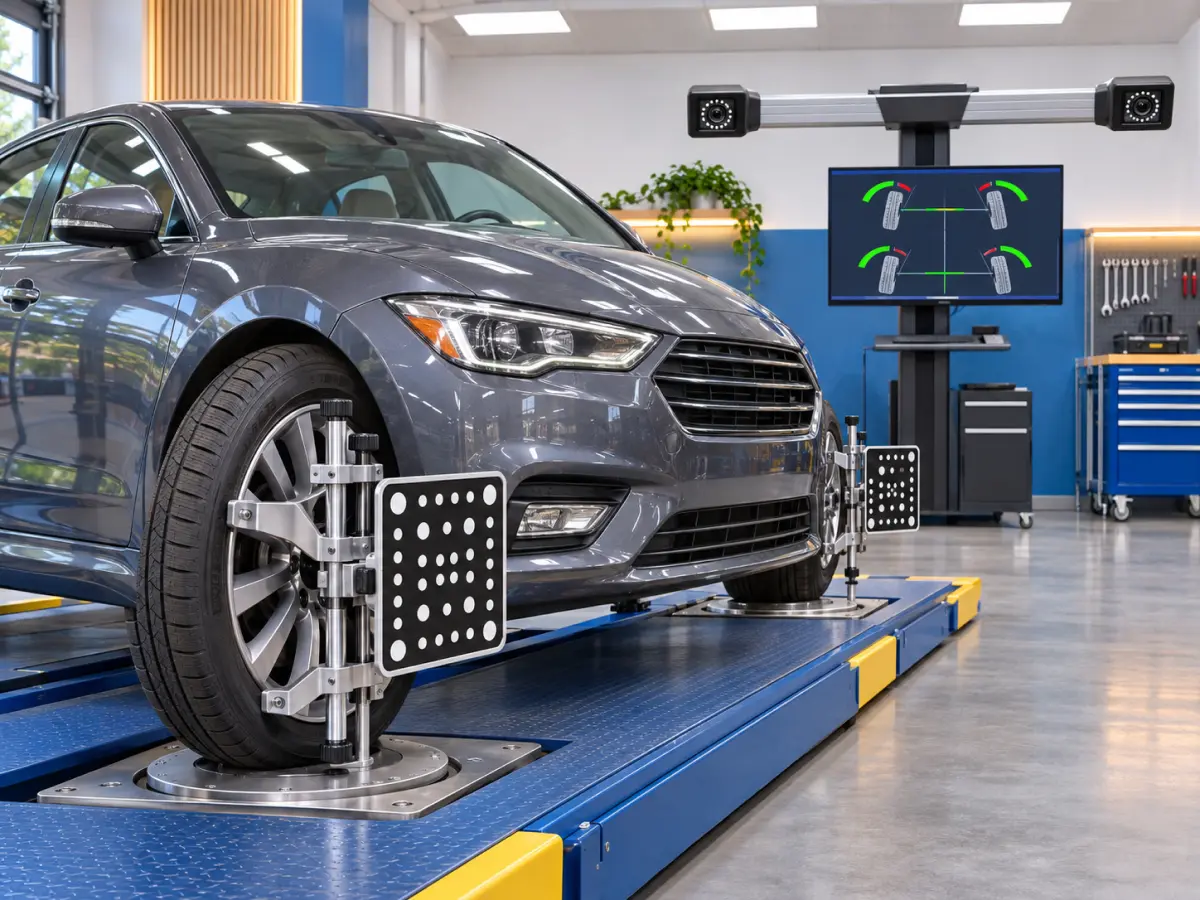
In short: a car most often pulls to one side because of uneven tyre pressure or wear, incorrect wheel alignment angles, or worn suspension and steering parts. If the car pulls steadily on a level road, the tyres and wheel geometry are checked first. If it pulls when braking, over bumps or after hitting a pothole, the cause is more likely in the brakes or suspension, and a wheel alignment alone will not fix it.
What counts as pulling to one side
A car pulls to one side if, on a level straight road, it drifts left or right by itself and the driver has to keep correcting the steering. This is a different problem from an off-centre steering wheel: sometimes the car drives straight, but the steering wheel sits at an angle.
A slight drift to the right on an ordinary road can be normal. Most roads have a cross slope towards the shoulder to drain water, and the car “rolls” towards the slope. So it is best to check the car’s behaviour on a level stretch without ruts, ideally in both directions.
How to identify the likely cause by the symptom
The most useful clue for a mechanic is the situation in which the car pulls. It determines where to start the inspection.
| When it pulls | Most likely cause | What is checked |
| Constantly, at any speed | Uneven tyre pressure, incorrect camber or caster angles | Pressure, angle measurement on an alignment rig |
| Right after a tyre change | Tyre defect, different tyres on one axle | Swapping the front wheels |
| Only when braking | Sticking caliper, uneven pad performance, worn bushings | Brake system, chassis |
| When accelerating and lifting off | Worn control arm bushings, engine mounts | Chassis |
| After hitting a pothole or kerb | Bent control arm, tie rod or wheel, knocked-out geometry | Chassis diagnostics, then wheel alignment |
| Over bumps, the car wanders in ruts | Play in ball joints, tie rods and tie rod ends | Chassis and steering |
| After a wheel alignment | Tyre, worn parts, non-adjustable caster, steering wheel not centred | Re-checking the tyres and suspension |
Tyres: where to start
Tyres are the simplest and most common cause of pulling. A wheel with lower pressure has greater rolling resistance, so the car pulls towards the softer tyre. Pressure is checked on cold tyres and compared with the manufacturer’s placard on the door pillar or fuel filler flap.
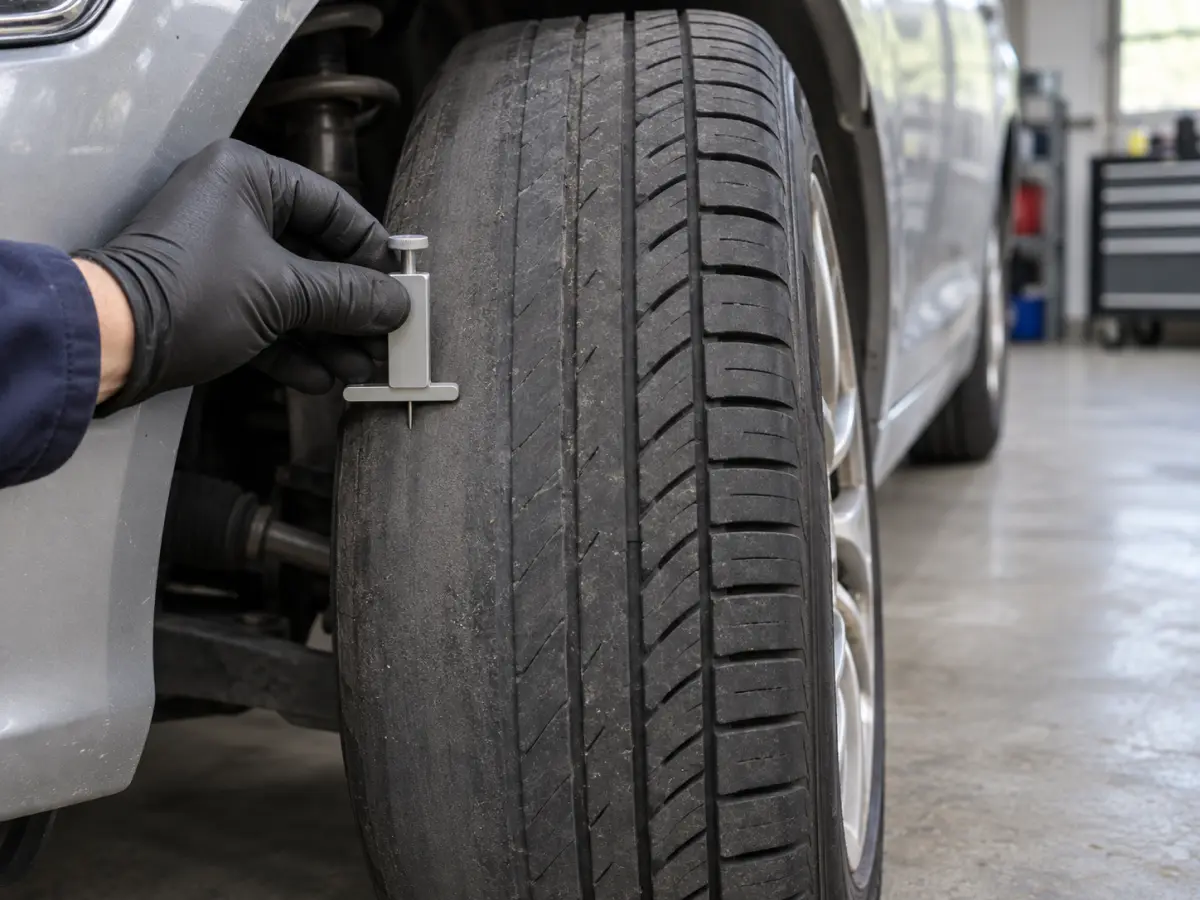
Different tyres on one axle also cause pulling: another model, a different degree of wear or tyre age. Even a new tyre can pull because of an internal cord defect. If the problem appeared after a tyre change, the front wheels are swapped. If the car now pulls the other way, the tyre is to blame. If it pulls the same way, the cause lies in the geometry or suspension.
The tread wear pattern also hints at where the problem is:
| How the tyre is worn | What it usually means |
| Inner or outer edge more worn | Incorrect camber angle |
| Saw-tooth (feathered) tread wear | Incorrect toe |
| Both edges more worn than the centre | Prolonged driving with low pressure |
| Centre more worn than the edges | Pressure above normal |
| Patchy (cupped) wear | Faulty shock absorbers or wheel imbalance |
Wheel alignment: when the geometry is to blame
Wheel alignment refers to the angles at which the wheels are set relative to the body and the road. Camber is the tilt of the wheel from vertical when viewed from the front. Toe shows how much the wheels point towards each other when viewed from above. Caster is the forward or backward tilt of the steering axis, which determines how the steering wheel returns to centre.
Straight-line stability is affected most by the difference in angles between the left and right wheels. The car pulls towards the wheel with more positive camber or less caster. Incorrect toe usually shows up differently: the steering wheel is off-centre and the tyres quickly develop saw-tooth wear.
Wheel geometry is usually knocked out after hitting a pothole or kerb, replacing tie rods, tie rod ends or control arms, fitting different springs, or an accident. The angles can only be checked and set to the manufacturer’s specifications on an alignment rig — for example, with a wheel alignment in Lviv.
An important point: on many passenger cars only toe is adjustable, while camber and caster cannot be changed or only within narrow limits. If the rig shows a significant difference in camber or caster between sides, it is usually a sign of a bent or worn part. In that case the problem cannot be “adjusted out” — suspension repair is needed.
Suspension and steering: why alignment doesn’t always help
Worn bushings, ball joints, tie rod ends and tie rods create play. On the rig, with the car stationary, the angles may be within spec. But when braking, accelerating or driving over bumps, the worn part shifts the wheel, and the car pulls specifically in those situations.
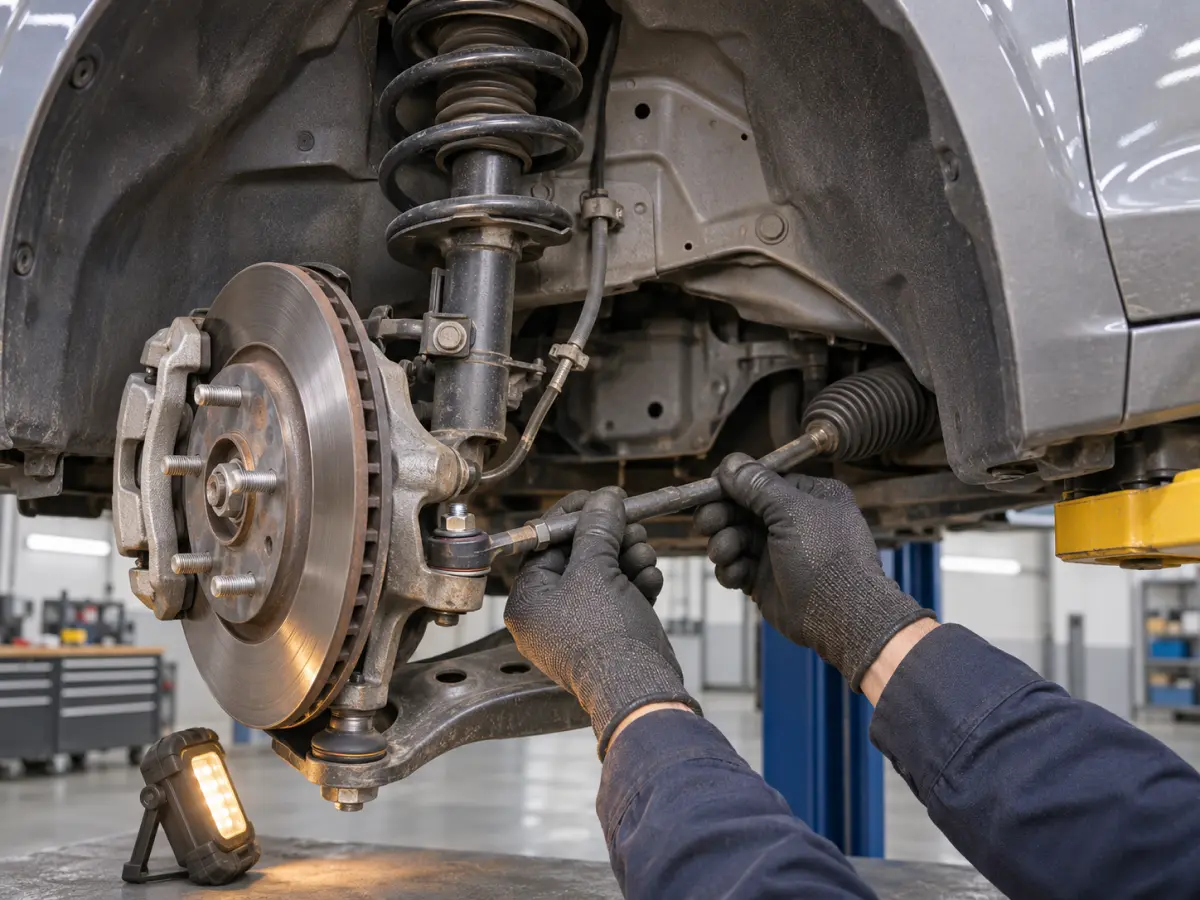
Pulling can also be caused by:
- a sagging or broken spring on one side, which changes the ride height and wheel angles;
- a worn strut top mount;
- a control arm, subframe or tie rod bent by an impact;
- a faulty shock absorber that keeps the wheel from maintaining good contact with the road.
If an alignment is done on worn suspension, the angles will soon go out again and the money spent on adjustment will be wasted. The correct order is: first chassis diagnostics, then replacement of worn parts, and only after that adjustment of the angles.
The chassis deserves attention if the pulling is accompanied by knocking over bumps, steering wheel vibration, play when turning, or the car wanders in ruts. This is especially relevant in Lviv: cobblestones in the centre, tram tracks and post-winter potholes put extra load on bushings and ball joints.
Brakes: if it pulls when braking
If the car drives straight but drifts to one side when you press the brake, the left and right wheel brakes are working with different force. The most common causes are seized slide pins or caliper piston, unevenly worn or oil-contaminated pads, or a damaged brake hose.
This symptom should not be put off. Under hard braking on a wet or slippery road, the car may spin.
If a caliper sticks constantly, the car pulls even without braking. Other signs: after a drive there is a noticeable smell of brakes from one wheel, the car coasts less freely, and fuel consumption increases.
Other possible causes
On front-wheel-drive cars, a slight pull under hard acceleration may be a design characteristic. If it has become stronger, the engine mounts and bushings are checked. Less often, pulling is caused by a faulty wheel bearing or a power steering fault. A car with wide tyres may also wander on motorways with deep ruts.
What you can safely check yourself
- The pressure in all tyres according to the manufacturer’s placard, on cold wheels.
- The tread condition: even wear, identical tyre models on one axle.
- The situation in which the car pulls: constantly, when braking, when accelerating, over bumps or after a tyre change.
- The behaviour on a level stretch without ruts or slope, ideally in both directions.
Don’t adjust the tie rods or set the toe “by eye” yourself. Without an alignment rig it is easy to make the geometry worse, and the car will still have to be adjusted again.
When to visit a service center as soon as possible
- the car pulls when braking;
- the pulling started suddenly after hitting a pothole or kerb;
- knocking, vibration or steering play has appeared;
- there is a smell of brakes from one wheel;
- a tyre is visibly wearing on one edge.
Diagnosing pulling at Avtopark-Service
At the Avtopark-Service auto service center in Solonka (60 Kiltseva St., near the southern edge of Lviv), the inspection starts with chassis diagnostics: tyre pressure, steering and suspension. Then the wheel angles are measured on an alignment rig and adjusted to the manufacturer’s specifications. If worn parts are found, we first suggest replacing them so that the adjustment holds.
According to the price list on the website as of November 2026, a wheel alignment check costs UAH 1,000 and an adjustment costs UAH 1,200. The final cost depends on the car and the scope of work. The service center is open 24/7, so you can come in at a convenient time.
Frequently asked questions
Is it dangerous to drive if the car pulls to one side?
A slight, steady pull caused by tyre pressure poses no immediate danger, but it speeds up tyre wear. Pulling when braking, after an impact or together with knocking is dangerous: it may indicate a fault in the brakes or suspension parts.
Do I need a wheel alignment after a seasonal tyre change?
If no suspension parts were replaced and the car drives straight after the change, no. A check is needed if pulling or an off-centre steering wheel appears, or if tie rods, tie rod ends or control arms were also replaced along with the tyre change.
Why does the car still pull after a wheel alignment?
Most often the cause is not the geometry: a defective or unevenly worn tyre, play in the suspension or sticking brakes. There may also be a caster difference that on many cars cannot be adjusted without repairing suspension parts.