
High-Pressure Fuel Pump or Injectors: How to Find Out Which One Is Faulty
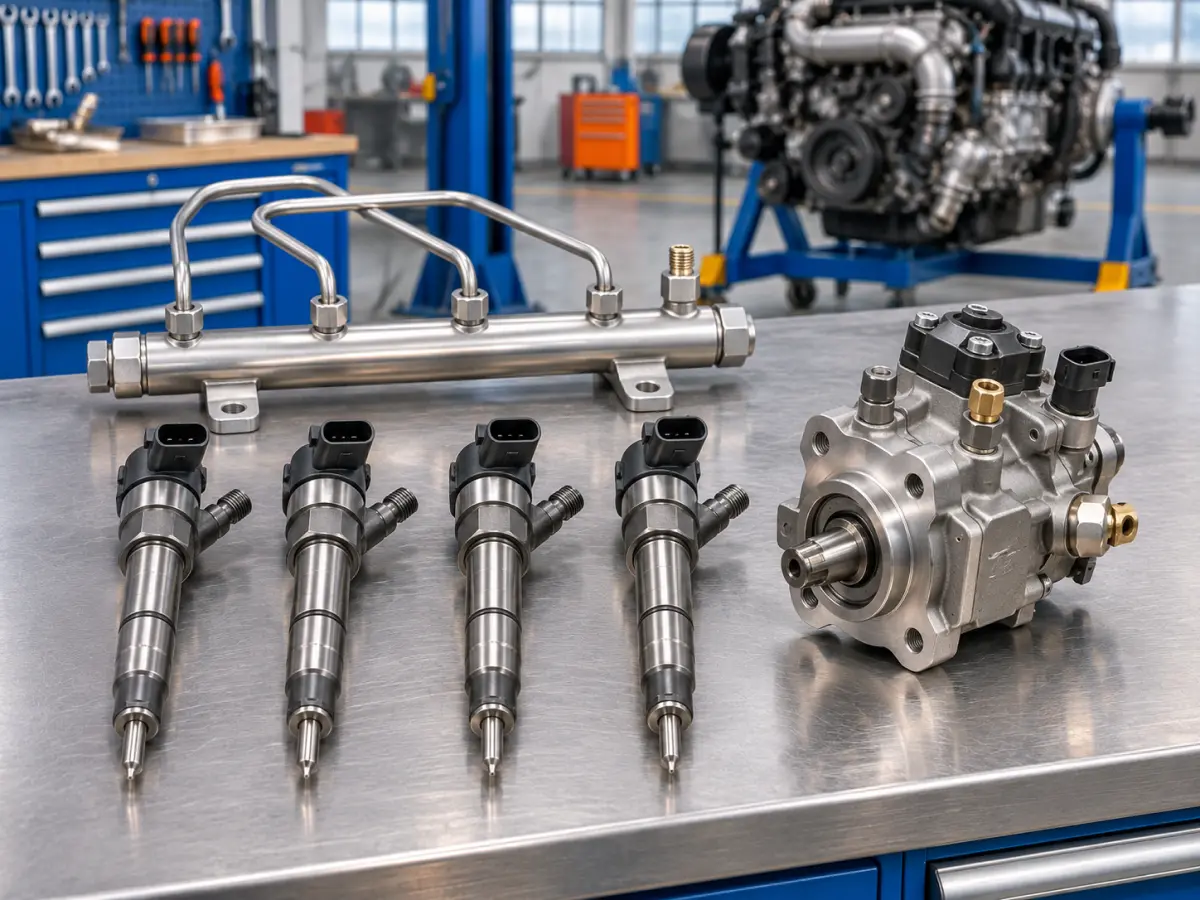
In short: the high-pressure fuel pump and the injectors of a Common Rail diesel produce very similar symptoms. Both affect fuel pressure and delivery. You can’t tell them apart “by ear” or by how the car behaves — you need measurements: rail pressure (specified and actual), injector corrections and the volume of their back-leakage. The most expensive mistake is replacing the pump when the pressure is actually being “eaten up” by injectors with excessive back-leakage.
How the high-pressure pump and the injectors are connected
In a Common Rail system, fuel passes through several stages. The lift pump delivers it from the tank through the filter to the high-pressure pump. The high-pressure pump compresses the fuel to high pressure and forces it into the rail. The rail pressure sensor sends the value to the control unit. The control unit operates the regulator and opens the injectors, and part of the fuel from the injectors returns to the tank through the return line.
Because of this chain, one fault can masquerade as another. If an injector has a large internal leak, fuel goes into the return line, rail pressure drops, and the control unit logs a low-pressure fault. To the driver and the scanner, it looks like a weak pump, even though the pump may be in perfect condition.
Symptoms: what points more to the injectors and what to the pump
| Symptom | More likely | Explanation |
| Rough idle, vibration, engine misfiring | Injectors | One or more injectors deliver fuel unevenly |
| Ticking or knocking in one cylinder | Injectors | Over-fuelling, dribbling, poor atomisation |
| Oil level rising, oil smells of diesel | Injectors | Fuel gets into the crankcase through a leaking injector |
| Black smoke under acceleration | Injectors | Poor atomisation; the turbo or air supply are also possible |
| Hard starting when the engine is hot | Injectors | Excessive back-leakage prevents building enough pressure to start |
| Long cranking when cold, pressure doesn’t build while cranking | High-pressure pump or low-pressure supply | The pump doesn’t generate enough pressure; or injector back-leakage, or air in the system |
| Hesitation and limp mode under load, code P0087 | High-pressure pump, regulator or supply | Actual pressure lags behind the specified value when fuel demand is at its peak |
| Whining or metallic noise from the pump, metal particles in the filter | High-pressure pump | Mechanical wear of the pump |
| Code P0093 (large leak) | Injectors or fuel lines | Fuel is lost downstream of the pump |
| Code P0088 (pressure too high) | Regulator or pressure sensor | The pump is rarely the cause |
The table shows where to look, not a diagnosis. Almost every symptom has several possible causes, and the final answer comes from measurements.
What else it could be
Before suspecting expensive components, simpler causes with similar symptoms are checked:
- a clogged fuel filter or water in it;
- air getting into the low-pressure lines;
- a faulty lift pump;
- a rail pressure sensor giving incorrect readings;
- the pressure or metering regulator, wiring and connectors.
Loss of power without fuel problems can also be caused by the turbocharger, EGR valve, mass airflow sensor or a clogged diesel particulate filter.
Testing methods: from simple to complex
- Reading codes and live data with a scanner. The specified and actual rail pressure are compared at idle, during cranking and under load. The most informative log is recorded during a test drive. If pressure lags only under load, the pump’s output and the supply circuit are checked. If the corrections of one injector differ noticeably from the others, it becomes the main suspect.
- Checking the low-pressure circuit. The fuel filter is inspected (water, dirt, metal particles), the lines are checked for air, and the lift pump is tested. This is the cheapest stage, but without it further tests may give false results.
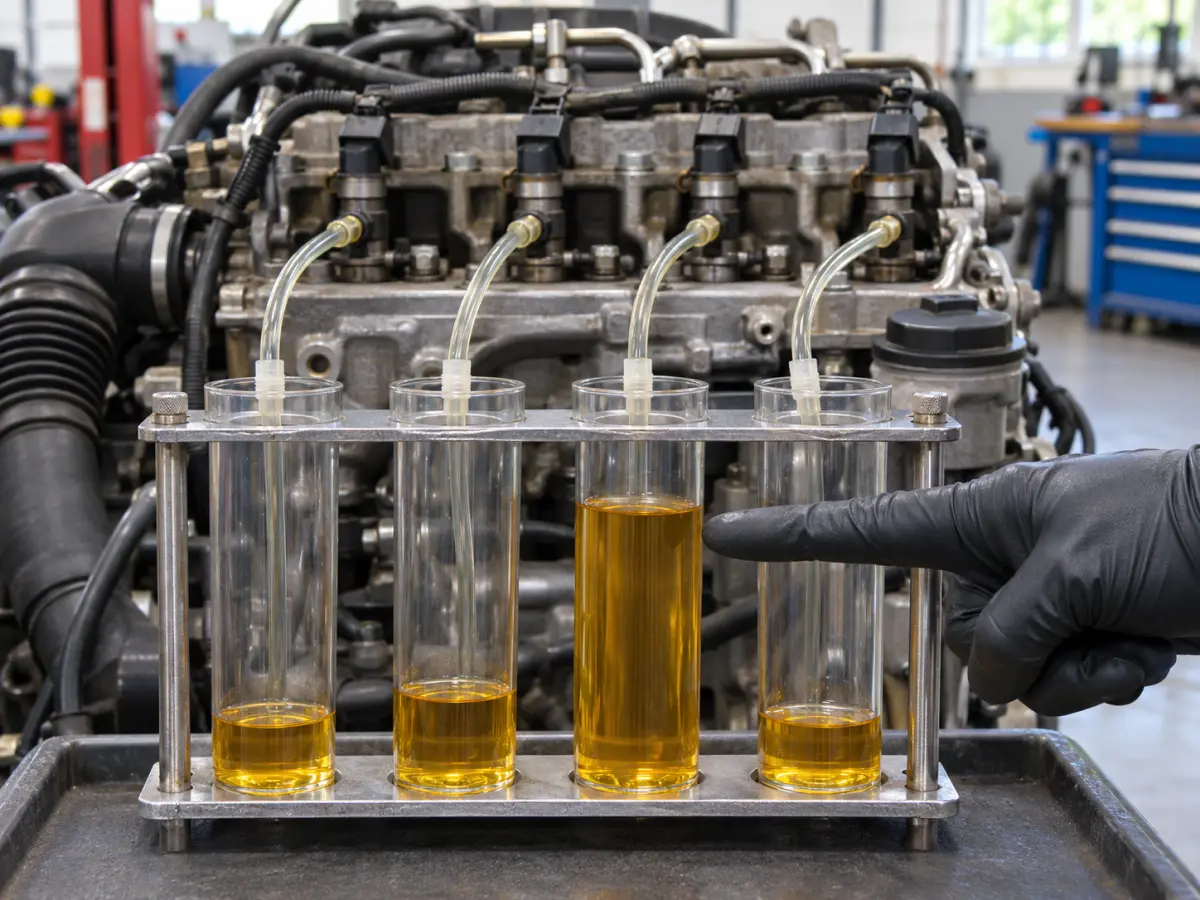
- Injector back-leak test. Measuring containers are fitted to the return ports, and the amount of fuel returned by each injector is compared. An injector with significantly higher back-leakage is faulty. The method depends on the injector type (solenoid or piezo), so the test is done using data for the specific engine.
- Testing the high-pressure pump on the vehicle. The pump is isolated from the injectors to check whether it builds the required pressure during cranking. If pressure is normal with the rail isolated but not with the injectors connected, the injectors are the cause.
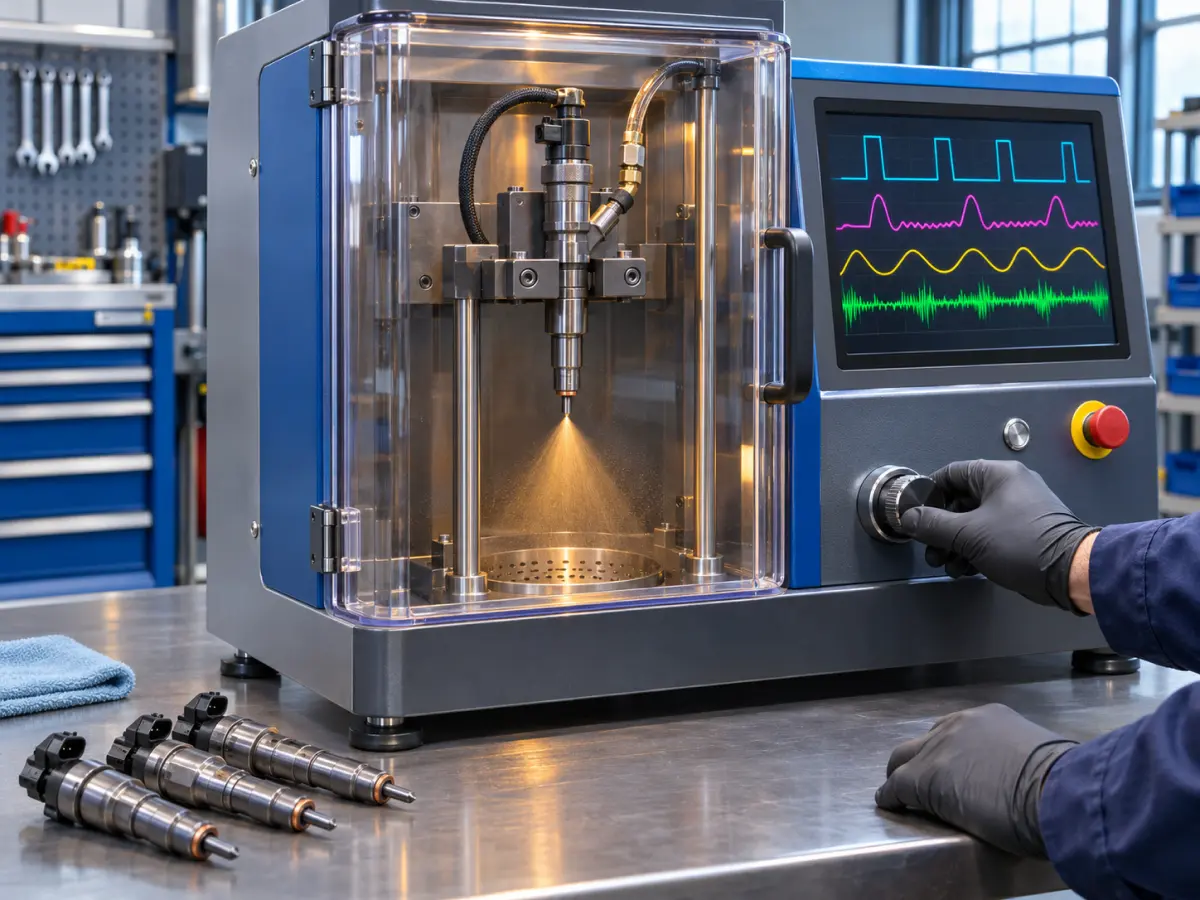
- Bench testing. On the bench, injectors are tested for delivery in different modes, back-leakage and sealing. The high-pressure pump is tested for output and pressure. A bench gives the full picture but requires removing the component, so it is used after the previous stages.
This sequence saves money. An expensive bench test is needed only once simpler checks have already narrowed down the suspects.
Metal particles: when both components are to blame
If the high-pressure pump disintegrates, metal particles travel with the fuel into the rail, pipes and injectors. Fitting a new pump without cleaning the system puts the new pump at risk too: the remaining debris will damage it within the first few kilometres. So if metal particles are found in the filter or regulator, the entire high-pressure system is checked and flushed, and the injectors must be tested.
The most common causes of pump failure are water and poor-quality fuel, petrol in a diesel tank, and natural wear.
What not to do
- Replace the pump or a set of injectors based on symptoms alone, without measurements.
- Loosen high-pressure lines on a running engine. Pressure in a Common Rail system exceeds 1,000 bar, and a jet of fuel can penetrate the skin.
- Pour additives into the tank instead of getting diagnostics if there are already pressure faults or the engine runs rough.
- Drive in limp mode for a long time: the fault gets worse, and the repair gets more expensive.
High-pressure pump and injector diagnostics in Lviv
The Avtopark-Service auto service center in Solonka (60 Kiltseva St., near the southern edge of Lviv) has a dedicated diesel department. It carries out diesel injector repair for Bosch, Delphi, Denso and Siemens, as well as high-pressure fuel pump repair. Diagnostics start with a scanner and the low-pressure circuit, and a component is removed for bench testing only when the previous tests have pointed to it.
According to the price list on the website, computer diagnostics of a diesel engine costs from UAH 1,200, bench testing of a high-pressure pump from UAH 2,500, and a fuel rail check UAH 600. The final cost depends on the engine and the scope of work, so please confirm the price when booking. The service center is open 24/7.
Frequently asked questions
Can injectors be tested without removing them?
Partly, yes. A scanner shows the corrections and cylinder balance, and a back-leak test reveals an injector with an internal leak. Only a bench test gives the full picture of delivery and atomisation.
Do all injectors need replacing if one is faulty?
Usually not: only the faulty one is repaired or replaced. After fitting a new or reconditioned injector, many engines require its code to be programmed into the control unit. The exception is when there are metal particles in the system: then all injectors are tested.
Can I drive if I suspect the high-pressure pump?
If the car goes into limp mode, stalls or metal particles are found in the filter, you shouldn’t drive. Every kilometre on a failing pump spreads metal through the system and increases the cost of repair.
Why did the pressure fault remain after replacing the pump?
Most often the pump wasn’t the cause: excessive injector back-leakage, air getting in, or a faulty regulator or pressure sensor. That’s why a back-leak test is always done before replacing the high-pressure pump.