
Diesel Particulate Filter (DPF) Not Regenerating: What to Check
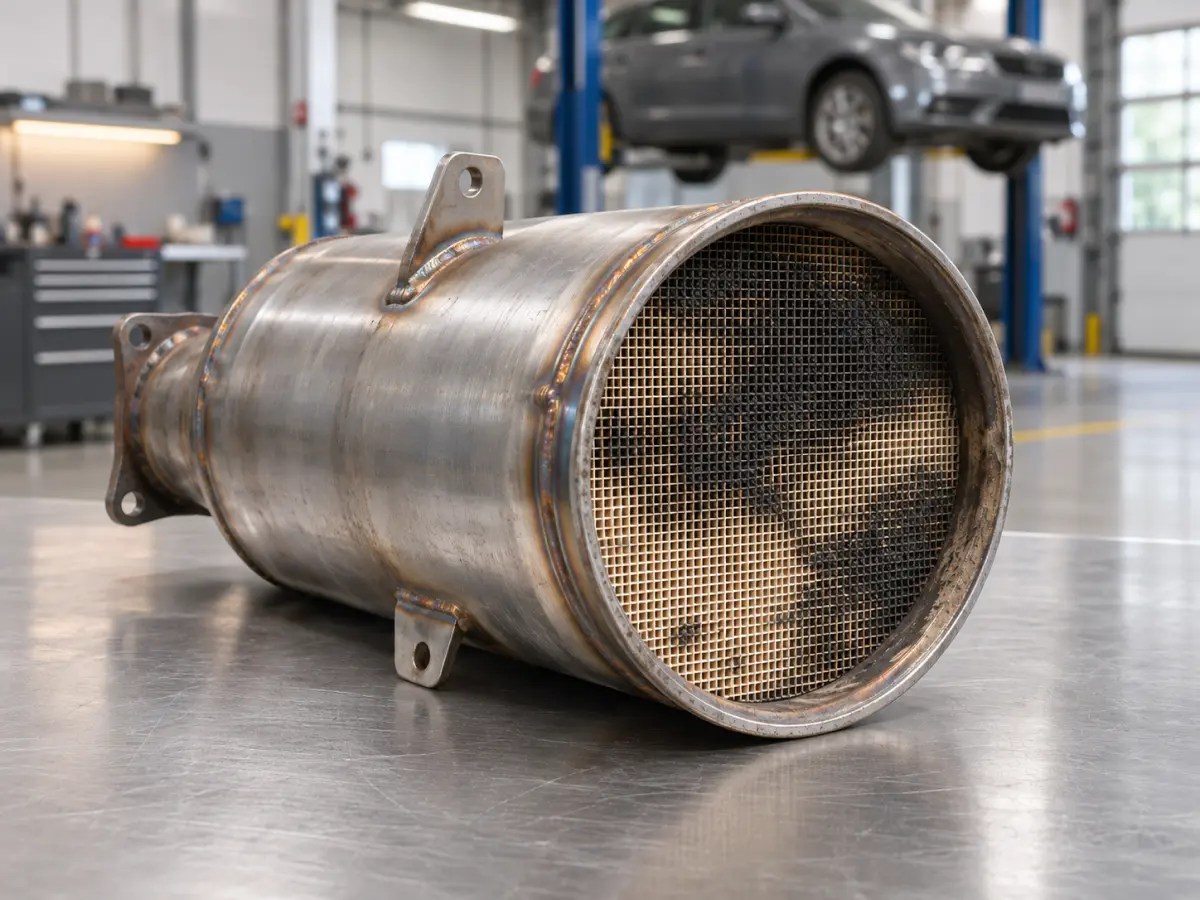
In short: a DPF most often fails to regenerate because of short trips that don’t give the exhaust time to heat up, a faulty differential pressure sensor, or other engine faults that block the process. If the engine produces too much soot because of the EGR, injectors or turbo, the filter clogs faster than it can clean itself. And if ash has built up inside, regeneration won’t help at all: the filter needs cleaning or replacement.
How DPF regeneration works
A diesel particulate filter (DPF, called FAP on PSA vehicles) traps soot particles from diesel exhaust gases. To keep the filter from clogging, the soot is burned off periodically. This process is called regeneration.
Passive regeneration happens by itself during long motorway drives, when the exhaust is already hot. Active regeneration is triggered by the control unit: it raises the exhaust gas temperature with extra fuel injection, and the soot burns off. The control unit decides when to start it based on the calculated soot load and the readings of the differential pressure sensor.
While active regeneration is under way, the driver may notice:
- a higher idle speed;
- the cooling fan running after the engine is switched off;
- a smell of hot metal from the exhaust;
- the start-stop system disabled and slightly higher fuel consumption.
Cars with an additive system, such as some Peugeot and Citroën models, also need a special fluid in a separate tank for regeneration. When it runs out, the filter stops cleaning itself properly.
Signs that regeneration isn’t completing
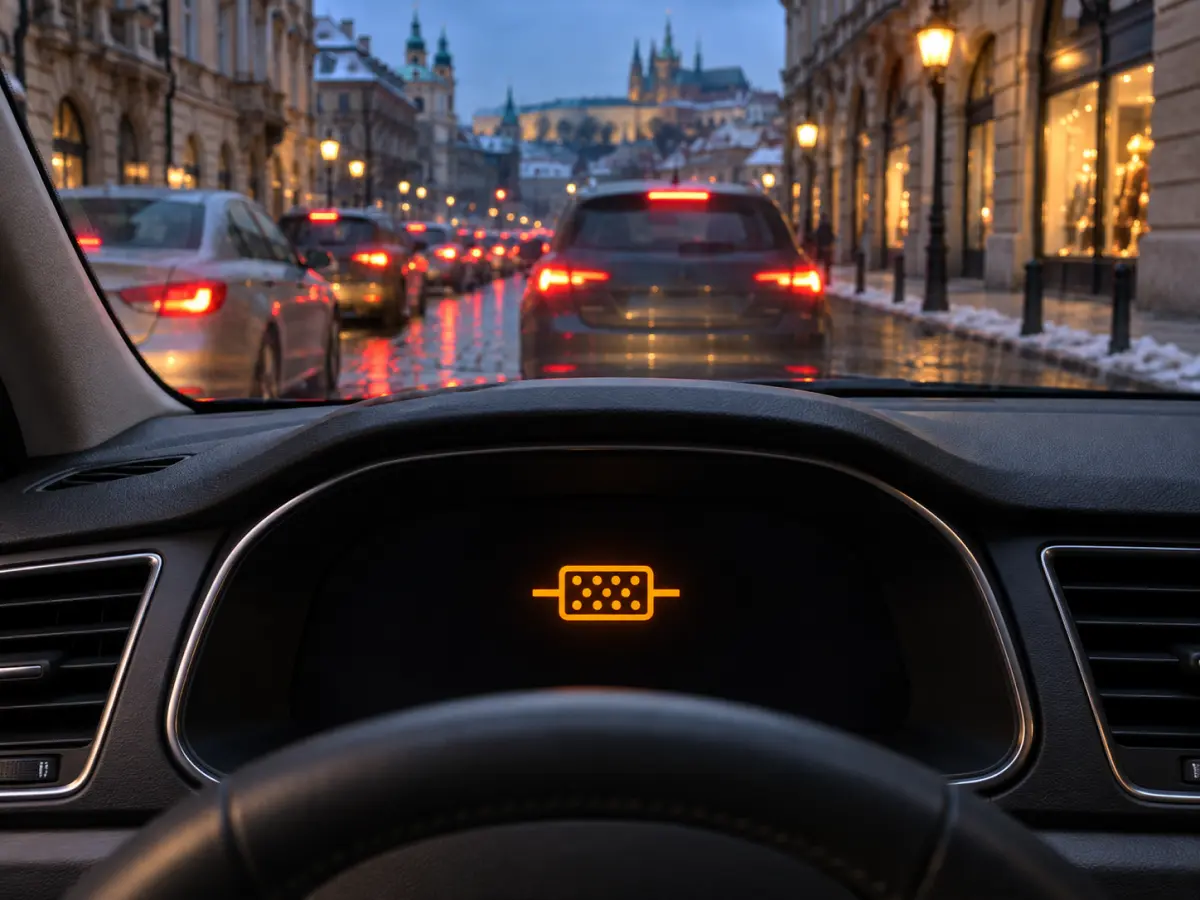
- the DPF warning light or Check Engine light is on;
- the engine goes into limp mode and lacks power;
- regeneration starts too often, or signs of it appear almost every day;
- fuel consumption increases;
- the engine oil level rises because fuel from interrupted regenerations gets into the crankcase.
The last sign is often overlooked, even though it matters. Oil diluted with fuel lubricates the engine less effectively, so with frequent interrupted regenerations it is changed earlier than scheduled.
Why the DPF won’t regenerate
The conditions for regeneration aren’t met
The control unit starts active regeneration only under certain conditions, and without them the process doesn’t start or gets interrupted:
- short city trips during which the engine doesn’t reach operating temperature;
- switching off the engine in the middle of a regeneration;
- a faulty thermostat or coolant temperature sensor that makes the control unit “see” a cold engine;
- a low fuel level: on some models regeneration won’t start while the tank is nearly empty;
- active faults in other systems. If the control unit detects a fault in the EGR, mass airflow sensor, injectors or exhaust temperature sensors, it blocks regeneration.
In Lviv, the first cause is the most typical. Daily trips of a few kilometres in traffic jams, especially in winter, don’t let the filter clean itself, even if the whole system is working properly.
The differential pressure sensor or its pipes
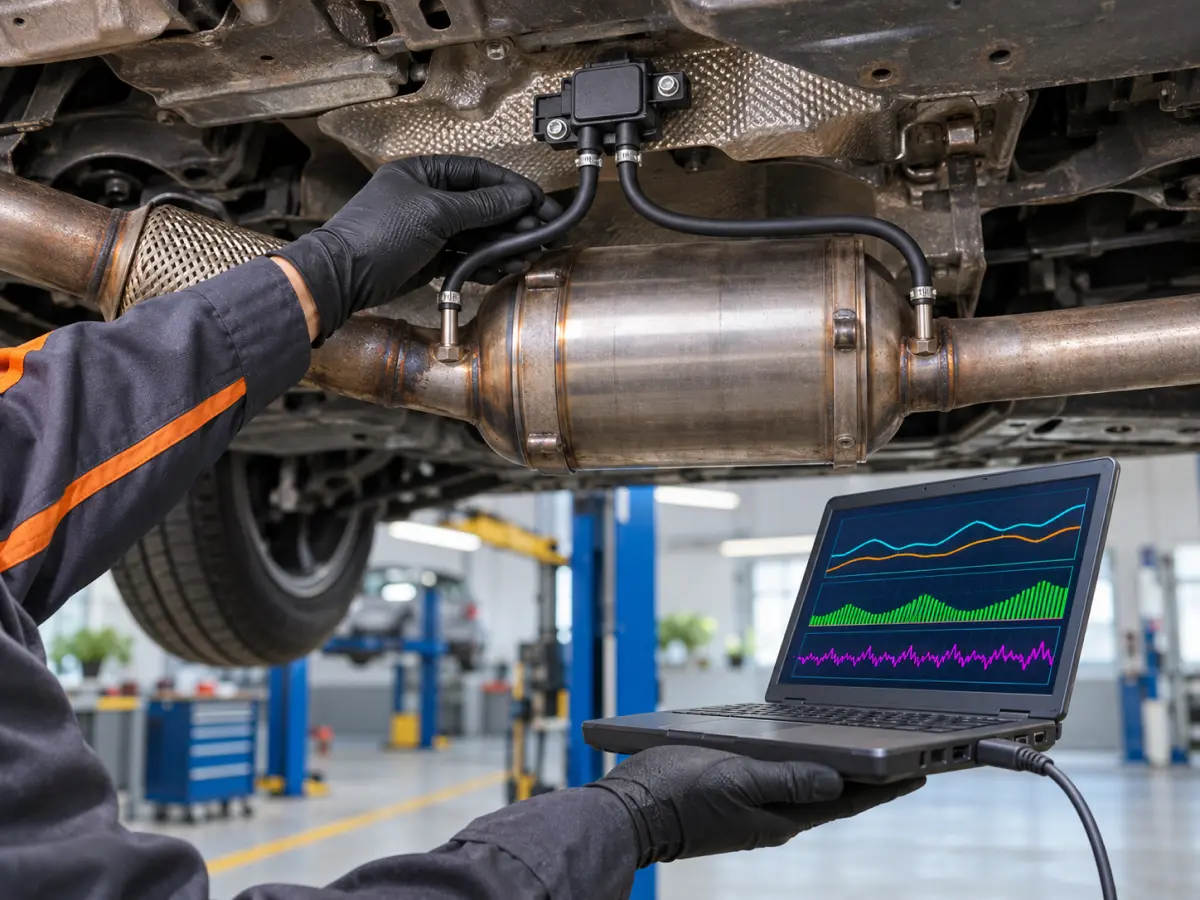
The sensor measures the pressure difference before and after the filter and tells the control unit how full it is. If the sensor is faulty, or its pipes are cracked, disconnected or blocked with condensation, the control unit receives incorrect data. It either doesn’t start regeneration when it’s needed, or considers the filter clogged when it is actually clean.
The engine produces too much soot
When more soot is produced than calculated, the filter clogs faster than it can clean itself. The causes are usually outside the filter itself:
- an EGR valve that is stuck or doesn’t close;
- injectors that over-fuel or atomise fuel poorly;
- boost leaks or a faulty turbocharger;
- a clogged air filter or faulty mass airflow sensor.
In this case, cleaning or regeneration will only give a temporary result. Until the cause is fixed, the filter will clog again.
Ash in the filter
Only soot burns during regeneration. Ash — the non-combustible residue of engine oil additives — stays in the filter and gradually fills it up. Once there is a lot of ash, no regeneration can clean the filter. The process is accelerated by increased oil consumption, for example due to a worn turbo, and by oil that is not designed for engines with a DPF.
Damaged filter
Overheating during regeneration of a heavily clogged filter can crack or melt its internal structure. The filter then works incorrectly and usually needs replacing.
DPF fault codes
| Code | What it means |
| P2002 | DPF efficiency below threshold |
| P2463 | Excessive soot accumulation |
| P242F | DPF restriction due to ash accumulation |
| P2452–P2455 | Differential pressure sensor circuit or signal fault |
| P244A / P244B | Differential pressure across the filter too low or too high |
| P2458 | Regeneration duration exceeded |
| P2459 | Regeneration frequency too high |
A code points to a system, but not always to the cause. For example, P2463 can appear because of short trips or because of a faulty EGR valve or injector. That’s why replacing the filter based on the code alone, without diagnostics, often doesn’t solve the problem.
Diagnostic steps: what to check
- Read the fault codes and live data: calculated soot mass, pressure drop across the filter at idle and at higher revs, distance since the last regeneration, accumulated ash, exhaust and coolant temperatures.
- Check the differential pressure sensor and its pipes. It’s an inexpensive component, but all the control unit’s decisions depend on it.
- Find and fix the causes of excess soot: check the EGR, boost, mass airflow sensor and injector corrections.
- If the soot load is within acceptable limits, perform a forced regeneration with diagnostic equipment. If there is too much soot, forced regeneration is not done: the filter can overheat and crack.
- If regeneration didn’t help, there is a lot of ash or the filter is damaged, the filter is removed for cleaning on special equipment or replaced.
- After replacing or cleaning the filter, perform an adaptation in the control unit so that it correctly calculates the new soot and ash levels.
The order matters. If you start with forced regeneration or cleaning and don’t fix the cause, the problem will return within a few hundred kilometres.
What the driver can do
- When the DPF warning light comes on, drive on a motorway at a steady speed for as long as the owner’s manual recommends, without switching off the engine.
- Don’t switch off the engine if you can tell a regeneration is under way: the revs are raised and the fan is running.
- Use oil approved by the manufacturer for engines with a DPF.
- Don’t drive constantly with the fuel level at a minimum.
- Check the oil level regularly: if it’s rising, that’s a sign of interrupted regenerations.
If the warning light hasn’t gone out after a motorway drive or the engine has gone into limp mode, diagnostics are needed. Driving for a long time with a clogged filter raises the pressure in the exhaust system and the load on the turbo and EGR.
DPF diagnostics in Lviv
The Avtopark-Service auto service center in Solonka, at 60 Kiltseva St., near the southern edge of Lviv, has a dedicated diesel department. It carries out diesel engine diagnostics, reads the DPF parameters, and checks the sensors, EGR and boost. Depending on the filter’s condition, forced regeneration, cleaning or replacement is performed.
If the cause is in the fuel equipment, diesel injector repair is done on site, so you don’t need to look for a separate service. According to the price list on the website, computer diagnostics of a diesel engine costs from UAH 1,200, and EGR valve cleaning from UAH 4,000. The cost of work on the filter itself depends on the model and its condition. The service center is open 24/7.
Frequently asked questions
How often should a DPF regenerate?
Usually once every few hundred kilometres. The exact interval depends on the engine, driving style and soot load. If regeneration starts much more often than before, the engine is producing too much soot or the pressure sensor is giving incorrect data.
Do DPF cleaning additives help?
Additives can make soot burn more easily, but they don’t remove ash and don’t fix the cause of excess soot. If there are already fault codes or limp mode, additives are no substitute for diagnostics.
How long does a DPF last?
Its service life depends on the engine, the oil and operating conditions. The main limitation is ash build-up, which over time makes regeneration ineffective. A healthy engine, the right oil and regular motorway drives significantly extend the filter’s life.
Can I just remove the DPF?
Technically it is possible, but it doesn’t fix the reason the filter was clogging and it increases emissions. In most EU countries it is illegal to drive a car without a DPF, and it will fail a roadworthiness test. So if the car will be used abroad, it’s worth considering diagnostics, cleaning or replacement of the filter first.