
Automatic Transmission Jerks or Shifts Harshly: Possible Causes
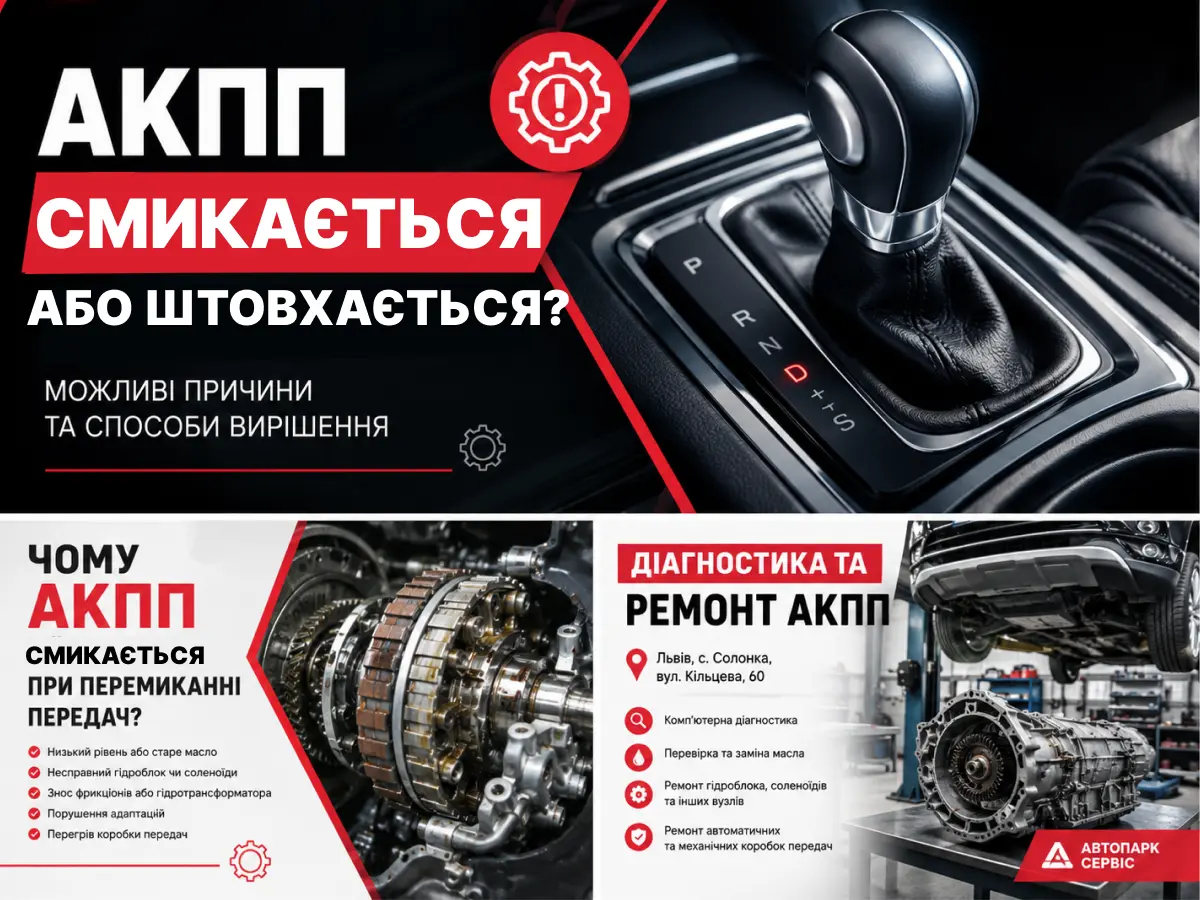
A properly functioning automatic transmission should change gears smoothly, without strong impacts, delays, or vibrations. If the automatic transmission jerks, shifts harshly during acceleration, or abruptly engages D or R, this may indicate either an adaptation issue or a fault in individual transmission components.
Not every jolt means that the transmission requires a complete overhaul. However, diagnostics should not be postponed. A fault that could initially be resolved by changing the transmission fluid, repairing the wiring, or adjusting the electronics may eventually cause wear to the friction clutches, valve body, or other components. Transmission manufacturer ZF lists jolts, delays, unusual noises, and jerking when starting to move among the signs that indicate the transmission and transmission fluid should be inspected.
How an Automatic Transmission May Jerk
The way the fault appears can help determine which areas should be checked during diagnostics. Drivers most commonly notice the following symptoms:
- a jolt when shifting from P or N into D;
- a jolt when engaging reverse gear R;
- jerking between first and second or second and third gear;
- delayed shifting after pressing the accelerator pedal;
- jerking during smooth acceleration;
- a jolt when the vehicle comes to a stop;
- vibration at a certain speed;
- slipping, when the engine speed increases but the vehicle barely accelerates;
- the transmission entering limp mode.
For accurate diagnostics, it is important to tell the technician exactly when the problem occurs: when the vehicle is cold or warmed up, during sudden acceleration, after a long journey, or only when a particular gear is selected.
Why an Automatic Transmission Jerks During Gear Changes
Low transmission fluid level
The fluid in an automatic transmission not only lubricates components but also helps generate the operating pressure. If the ATF level is too low because of a leak or improper servicing, the transmission may change gears with delays and jolts.
An insufficient amount of fluid increases friction and temperature inside the transmission, affects its operation, and accelerates component wear.
Old or contaminated automatic transmission fluid
Over time, transmission fluid loses some of its properties, while wear particles accumulate in it. Contaminated fluid may affect the operation of the valves and channels inside the valve body, causing pressure changes to occur with a delay.
Typical signs include:
- jolts after the transmission warms up;
- delayed gear engagement;
- jerking during smooth acceleration;
- noise during gear changes;
- dark fluid or a burnt smell.
However, changing the fluid is not a universal repair method. The fluid level and condition should first be checked, fault codes should be read, and the transmission’s operation should be assessed.
Incorrect transmission fluid
Each automatic transmission model requires a specific type of fluid with the correct viscosity and manufacturer approvals. Using an unsuitable fluid may result in harsh gear changes, vibration, and improper transmission operation.
Automatic transmission adaptations have been disrupted
The transmission control unit takes into account the driving style, system pressure, shifting speed, and the degree of component wear. Following repairs, battery disconnection, software updates, or a fluid change, the settings may require readaptation.
In this case, the transmission may shift harshly even without serious mechanical damage. However, simply resetting the adaptations is not enough. The system should first be checked for active faults.
Faulty solenoids or valve body
The valve body controls the transmission fluid flow and generates the pressure required to engage the gears. The solenoids open and close the appropriate channels according to commands from the electronic control unit.
Because of contamination, valve wear, solenoid faults, or pressure loss, the automatic transmission may:
- change gears abruptly;
- take a long time to engage D or R;
- skip a particular gear;
- shift harshly after warming up;
- enter limp mode.
The automatic transmission mechatronic system processes signals from the transmission, engine, and vehicle, so faults in this system may directly affect shifting quality.
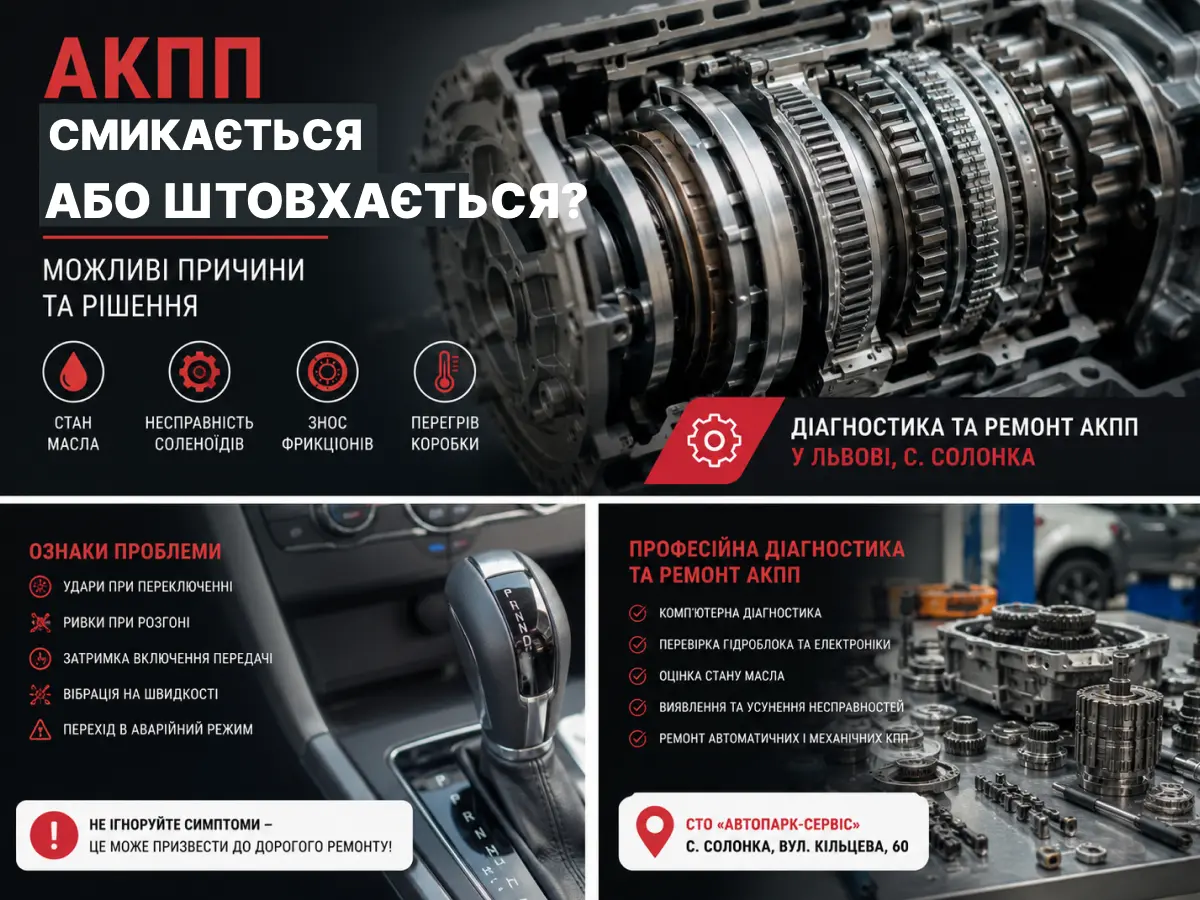
Worn friction clutches
Friction clutch packs are responsible for engaging specific gears. When they become worn, the transmission may initially slip and then engage the gear abruptly, which is felt as a jolt.
Signs of wear may include:
- increased engine speed without corresponding acceleration;
- a jolt after a delay;
- problems affecting only certain gears;
- metal or friction material particles in the fluid.
In this situation, changing the transmission fluid will no longer eliminate the cause — more detailed automatic transmission diagnostics are required.
Torque converter failure
The torque converter transfers torque from the engine to the transmission and provides a smooth connection between these units. Problems with the lock-up clutch may cause vibration, jerking, or a sensation that the vehicle is moving in a series of small jolts.
The symptom most commonly appears:
- while driving at a steady speed;
- under a light load;
- within a particular speed range;
- when the torque converter locks or unlocks.
The torque converter is one of the key components of a conventional automatic transmission and provides the connection between the engine and the gearbox.
Transmission overheating
High temperatures reduce the fluid’s performance and accelerate its oxidation. An automatic transmission may overheat because of a low fluid level, a contaminated radiator, a cooling system fault, towing a heavy trailer, or prolonged driving under heavy load.
If the transmission begins shifting harshly only after a long journey or while driving in traffic jams, its operating temperature should be checked. ZF notes that high temperatures accelerate fluid ageing and may lead to transmission malfunctions.
The Cause May Not Be the Transmission Itself
Jolts during gear changes are not always caused by an internal automatic transmission fault. Similar symptoms may be caused by:
- worn engine or transmission mounts;
- excessive play in the inner CV joints and driveshafts;
- propshaft faults;
- engine misfires;
- unstable throttle body operation;
- fuel system problems;
- faulty engine sensors;
- low battery or alternator voltage.
For example, a worn mount does not create a fault inside the automatic transmission, but it allows the powertrain to move abruptly when the load changes. The driver may perceive this as a strong transmission jolt.
Therefore, proper diagnostics should cover not only the transmission but also the engine, electronics, and wheel drive components.
Why the Automatic Transmission Jerks When Cold
A slight difference between the operation of a cold and warmed-up transmission may occur because the fluid viscosity changes. However, strong jolts should not be considered normal.
If the automatic transmission jerks only after a morning start, possible causes include:
- insufficient ATF level;
- old or unsuitable fluid;
- valve body contamination;
- worn seals;
- insufficient system pressure;
- a faulty temperature sensor.
If the symptom completely disappears after the transmission warms up, this does not mean that the transmission is in good condition. At an early stage, some faults only appear at a particular temperature.
Why the Transmission Jerks After a Fluid Change
Jolts after servicing may occur if:
- the incorrect type of ATF was used;
- the fluid level was set without observing the required temperature;
- too little or too much fluid was added;
- the necessary adaptation procedure was not performed;
- the filter was installed incorrectly;
- an existing fault became noticeable after the fluid change;
- contaminants remained in the system.
In this situation, the fluid’s compliance with the manufacturer’s approvals, its level and temperature, and stored fault codes should be checked.
Can You Drive If the Automatic Transmission Jerks?
If the jolt is minor and occurs only once, you should monitor the vehicle’s operation and arrange diagnostics. However, continued active use of the vehicle may be unsafe if:
- the jolts become stronger;
- a gear engages with a delay;
- the vehicle slips;
- there is a transmission fluid leak;
- there is a burning smell;
- the transmission enters limp mode;
- a transmission warning light appears on the dashboard;
- unusual noises appear;
- the vehicle cannot engage D or R.
In this situation, the vehicle should be stopped and taken to a service station. Continuing to drive may increase the extent and cost of the repair.
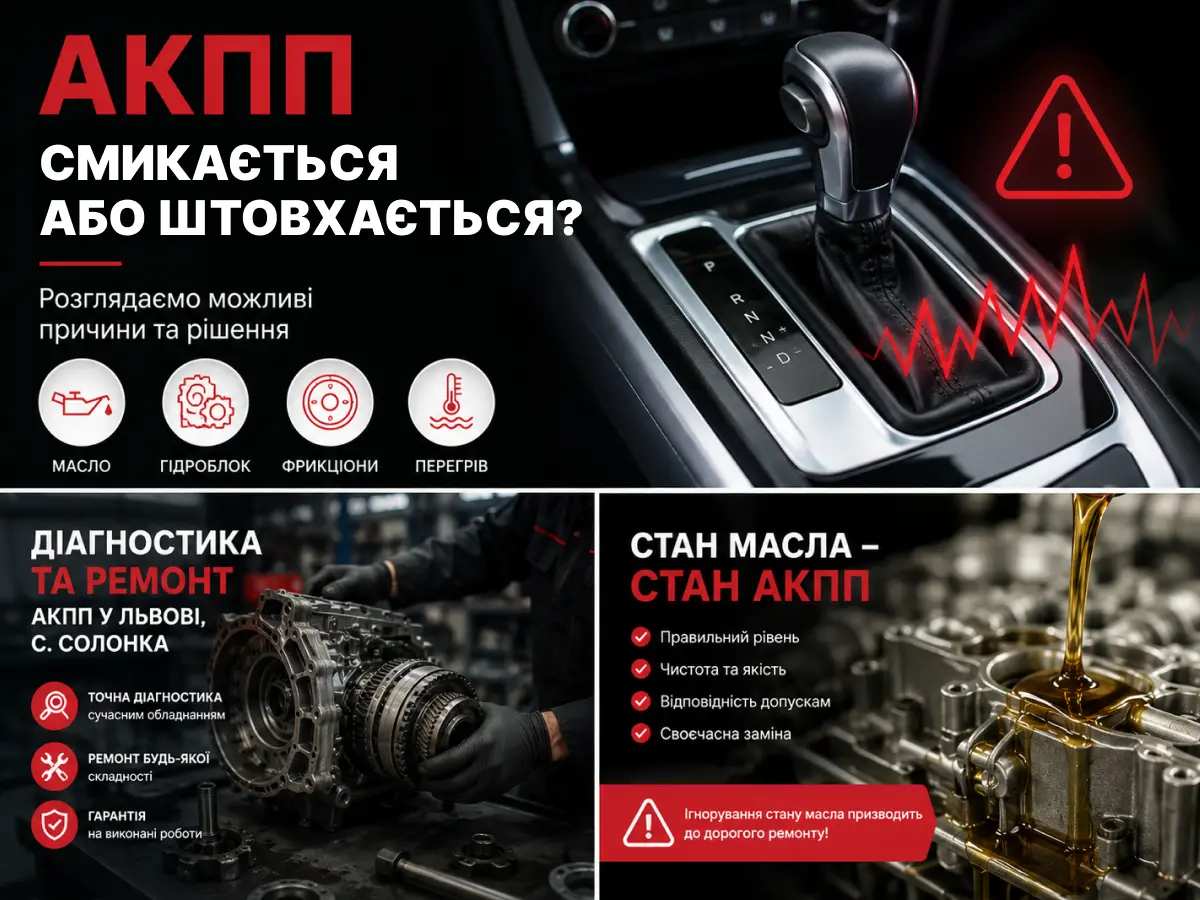
How Automatic Transmission Diagnostics Are Performed
An automatic transmission inspection should not be limited to reading a single fault code. Comprehensive diagnostics may include:
- Asking the driver about the problem and clarifying the conditions under which the jolts occur.
- Computer diagnostics of the transmission and engine.
- Checking actual operating parameters while driving.
- Monitoring transmission fluid temperature and pressure.
- Checking the ATF level, colour, and smell.
- Inspecting the transmission for leaks.
- Checking the engine mounts, driveshafts, and suspension components.
- A test drive.
- Checking transmission adaptations and software.
- Assessing the condition of the transmission pan, magnets, and filter when necessary.
Professional diagnostics make it possible to determine whether servicing, valve body or electrical repairs are sufficient, or whether the transmission needs to be dismantled.
Automatic Transmission Diagnostics and Repair in Lviv, Solonka
At the «Autopark-Service» service station, you can have your automatic transmission diagnosed near Lviv and have the transmission fluid, electronics, valve body, and other transmission components checked. The service centre diagnoses and repairs automatic and manual gearboxes and is located at 60 Kiltseva Street in Solonka, near the Lviv ring road.
You should visit a service station if:
- the transmission engages D or R with a jolt;
- the automatic transmission jerks during acceleration;
- gear changes are accompanied by impacts;
- a gear engages with a delay;
- vibration or unusual noise has appeared;
- the transmission has entered limp mode;
- the problem appeared after a transmission fluid change;
- traces of transmission fluid are visible under the vehicle.
Timely diagnostics will help identify the cause of the jolts and prevent the unnecessary replacement of properly functioning components.
Frequently Asked Questions
Will changing the fluid help if the automatic transmission jerks?
It will help only when the cause is related to the condition, level, or incorrect type of fluid. If the solenoids, valve body, friction clutches, or torque converter are faulty, the appropriate repairs will be required.
Is it normal for the transmission to shift slightly harshly when cold?
A slight change in shifting behaviour may occur, but strong jolts, delays, or slipping are not normal. The fluid, pressure, and electronic systems should be checked.
Why does the automatic transmission engage D from P with a jolt?
Possible causes include low fluid pressure, a valve body fault, worn engine mounts, excessive play in the transmission, or a load on the parking mechanism caused by incorrect parking on a slope.
Is adaptation required after changing the transmission fluid?
This depends on the vehicle model and transmission type. For some automatic transmissions, an adaptation procedure or relearning drive is part of the servicing process, but it should only be performed after the transmission’s technical condition has been checked.
Where can I have an automatic transmission checked near Lviv?
Automatic transmission diagnostics and repair are available at the «Autopark-Service» service station at 60 Kiltseva Street in Solonka. The location is convenient for drivers from Lviv and nearby communities close to the ring road.