
Diesel Car Smoking — What to Do and When to Visit a Service Station
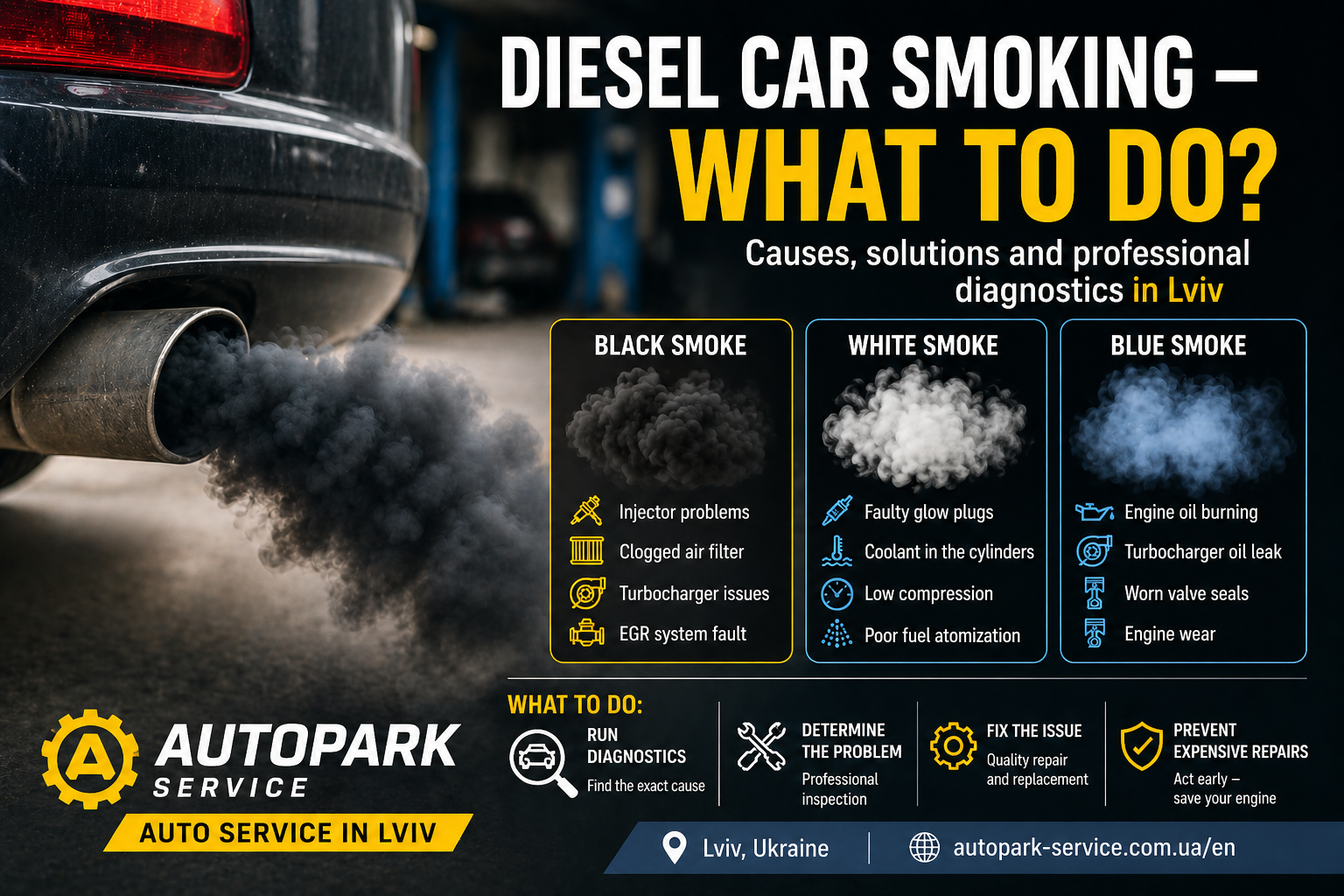
If your diesel engine has started smoking, it is not normal. Smoke from the exhaust is usually a sign of incorrect fuel combustion, engine wear, injector issues, turbocharger problems, or other faults. The color of the smoke can help identify the possible cause and understand how urgent the problem is.
Why Does a Diesel Engine Smoke?
The main reason is improper combustion. This happens when the engine gets too much fuel, not enough air, or when oil or coolant enters the combustion chamber.
- faulty diesel injectors;
- turbocharger problems;
- clogged air filter;
- EGR system issues;
- low compression;
- engine wear.
Black Smoke from a Diesel Exhaust
Black smoke usually means that the diesel fuel is not burning completely. In many cases, the engine receives too much fuel or not enough air.
- diesel injectors are overfueling;
- air filter is clogged;
- turbocharger is not working properly;
- EGR valve is dirty or stuck;
- fuel system requires diagnostics.
If you see black smoke, it is worth booking a diesel service in Lviv, especially if the car has also lost power or fuel consumption has increased.
White Smoke, Especially When Cold
White smoke can appear when starting a cold diesel engine. But if the smoke is thick, constant, or does not disappear after warming up, it may indicate a real problem.
- faulty glow plugs;
- poor fuel atomization;
- coolant entering the cylinders;
- low compression;
- fuel system malfunction.
In this case, proper car diagnostics in Lviv will help find the exact cause before the problem becomes more expensive.
Blue Smoke from a Diesel Engine
Blue smoke is one of the most serious signs. It usually means that engine oil is entering the combustion chamber and burning together with fuel.
- worn piston rings;
- turbocharger oil leak;
- valve seal wear;
- increased oil consumption;
- engine wear.
If blue smoke appears regularly, the car may need engine repair in Lviv, especially when smoke is combined with loss of power or high oil consumption.
When You Should Not Delay Diagnostics
You should visit a service station as soon as possible if:
- the smoke is thick and constant;
- the engine has lost power;
- fuel consumption has increased;
- the engine works unevenly;
- there is a smell of oil or coolant;
- the car is hard to start.
If you are not sure what causes the smoke, it is better to contact an auto service in Lviv and check the vehicle before the fault becomes more serious.
What You Can Check Yourself
Before visiting a service station, you can make a basic visual check:
- check the air filter;
- check the engine oil level;
- check the coolant level;
- notice when the smoke appears: cold start, acceleration, idle, or constantly;
- pay attention to the smoke color.
However, visual inspection is not enough to identify the exact reason. Diesel systems require professional diagnostics.
Why You Should Not Ignore Diesel Smoke
At an early stage, the problem may be relatively simple: a clogged filter, faulty sensor, dirty EGR valve, or injector issue.
But if you keep driving without diagnostics, the result can be much more expensive:
- injector repair or replacement;
- turbocharger repair;
- fuel system repair;
- engine repair;
- higher fuel and oil consumption.
Diesel Diagnostics and Repair in Lviv
If your diesel vehicle started smoking, do not guess the reason only by the smoke color. At Autopark-Service, specialists perform:
- diesel engine diagnostics;
- computer diagnostics;
- fuel system checks;
- diesel injector diagnostics and repair;
- turbocharger inspection;
- engine repair;
- checking causes of power loss and increased fuel consumption.
In most cases, the cause can be found during one visit to the service station.
FAQ
Why does my diesel car smoke when accelerating?
Most often, diesel smoke during acceleration is caused by injector problems, turbocharger issues, a clogged air filter, or incorrect fuel combustion.
Can I drive if my diesel engine is smoking?
You can drive for a short distance, but it is risky. If the smoke is thick, constant, or the engine has lost power, diagnostics should be done as soon as possible.
Why does a diesel engine smoke on a cold start?
Cold-start smoke may be caused by glow plug problems, poor fuel atomization, low compression, or fuel system faults.
Is black smoke from a diesel engine bad?
Yes. Black smoke means that fuel is not burning properly. It often points to injector, air intake, turbocharger, or EGR issues.
What does blue smoke from a diesel exhaust mean?
Blue smoke usually means that engine oil is burning inside the cylinders. This may be related to engine wear, valve seals, or turbocharger problems.
How much does diesel diagnostics cost?
The cost depends on the vehicle and the type of diagnostics required. In most cases, diagnostics is much cheaper than repairing serious damage later.
Conclusion
If your diesel engine has started smoking, it is already a warning sign. The sooner you find the cause, the cheaper the repair will usually be. The best solution is to run diagnostics as soon as smoke appears, especially if the car has lost power, fuel consumption has increased, or the smoke is thick and constant.
If you are not sure what causes the issue, contact an auto service in Lviv and let specialists check the vehicle professionally.