
Why Does the Car Have Trouble Starting in Winter? What to Do?
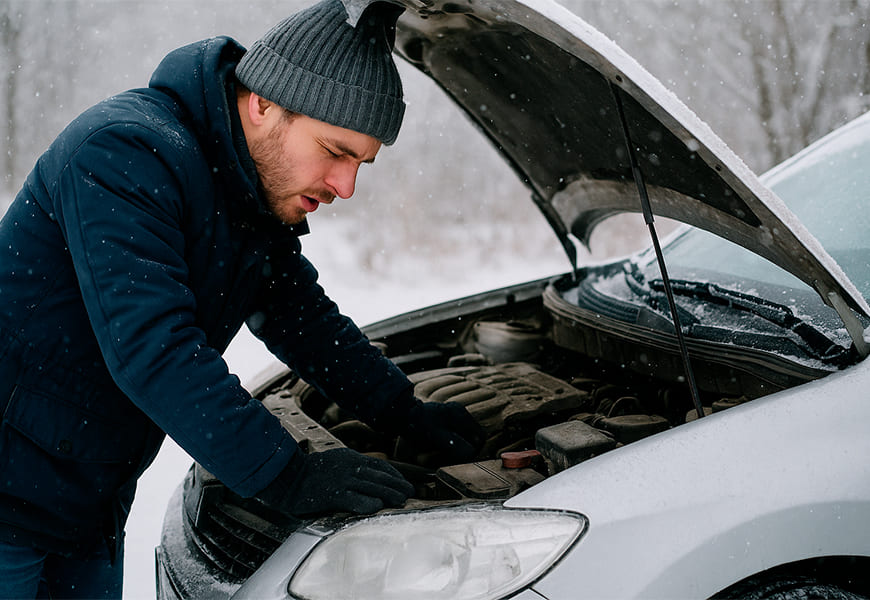
The winter period is a real test for a car. When the temperature drops below zero, many drivers face the same issue: the car has trouble starting in winter. A long start, weak battery response, unstable operation after starting, or complete engine failure — these symptoms indicate that one or more components are not working properly.
Autopark-Service in Lviv specializes in winter diagnostics and repairing systems that most commonly fail in the cold. Below is a detailed analysis of the causes, solutions, and tips on how to avoid starting problems in cold weather.
Why Does the Car Have Trouble Starting in Winter?
Cold weather negatively affects all components of the car: the battery, starter, alternator, fuel system, and even engine oil. Let’s look at the key causes.
1. Weak or Discharged Battery
This is the most common cause of starting issues in the cold. In low temperatures, the battery loses capacity, the electrolyte thickens, and the starter lacks the power to turn the engine.
Signs:
- slow starter cranking;
- dim headlights during start-up;
- relay clicking without start;
- complete ignition failure.
Solution:
Battery load testing. At Autopark-Service, we perform professional load testing on the battery. This allows us to accurately determine whether the battery is still “alive” or if it needs to be replaced.
2. Problems with the Starter or Alternator
In cold weather, the starter requires more power, and any malfunctions make starting even more difficult.
Why is this critical in winter:
- starter with worn brushes turns slowly;
- bendix sticking in cold weather;
- faulty alternator not charging the battery fully.
Signs of malfunction:
- distinct grinding or squealing sounds during start-up;
- starter turns, but the engine doesn’t catch;
- battery drains even after long trips.
Solution:
Starter and alternator diagnostics. At the service center, we perform comprehensive testing of the components, measure charging voltage, and inspect the mechanical parts of the starter.
3. Fuel System Failure in Cold Weather
Fuel behaves differently in winter, especially diesel. Low temperatures affect its flow, and a clogged filter or condensation in the tank makes starting even harder.
Insufficient fuel or poor fuel delivery:
- clogged fuel filter;
- frozen or thickened diesel;
- water in the fuel;
- problems with the fuel pump.
Important: Diesel fuel that is not winterized crystallizes at -10°C.
Solution:
- Fuel filter replacement
- Professional anti-gel treatment for diesel
At Autopark-Service, we use certified anti-gel products that restore the flow of winter diesel and make starting easier.
4. Thick Engine Oil
In extreme cold, even high-quality oil thickens. If the engine is filled with oil that is inappropriate for the temperature, the engine will be hard to turn.
Signs:
- hard cold start;
- short metallic “clicks” in the first seconds of operation;
- increased engine noise.
Why this is important: Inappropriate oil increases engine wear during startup.
Solution: Seasonal oil change to the manufacturer-recommended oil (0W-20, 5W-30, 0W-40, etc.).
5. Fuel Freezing or Condensation in the Tank
This occurs when the driver drives with a nearly empty tank. In cold weather, moisture forms, freezes, and blocks the fuel system.
Solution:
- keep the tank filled to 60–80%;
- add additives that bind water;
- perform preventive maintenance at the service center before winter.
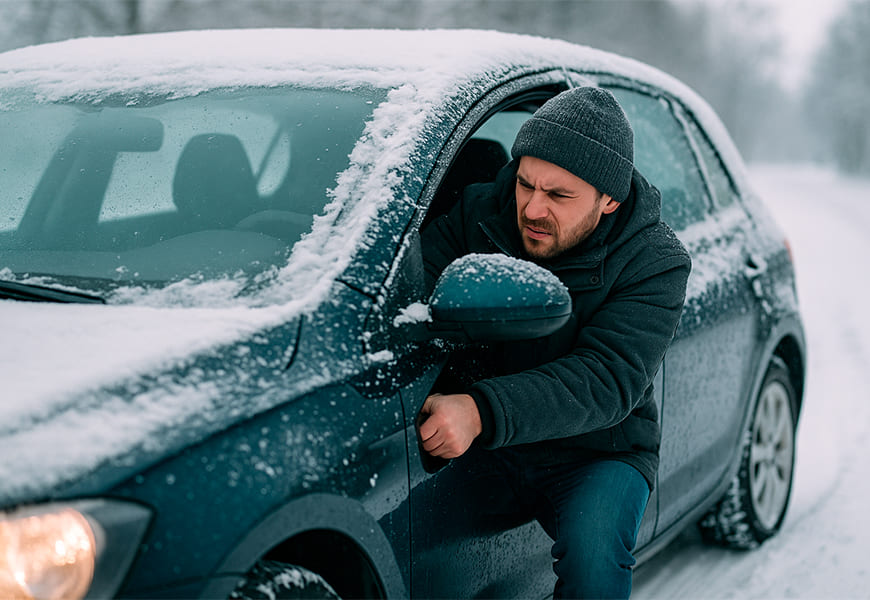
How to Quickly Solve the Problem? Recommendations from Autopark-Service
In most cases, professional diagnostics allow the problem to be identified in 15–30 minutes. Specialists recommend performing the following actions:
1. Battery Load Test
This allows you to determine the actual state of the battery, not just the voltage at the terminals.
2. Starter and Alternator Diagnostics
Check the brushes, bendix, charging voltage, and current consumption.
3. Fuel Filter Replacement
Especially important for diesel vehicles in cold weather conditions.
4. Anti-Gel Treatment for Diesel
Prevention and solving the problem of thickening diesel fuel.
5. Fuel System Inspection
Fuel pressure, pump condition, cleanliness of the fuel line.
How to Prevent Starting Problems in Winter?
Autopark-Service recommends:
- don’t wait for the cold weather for maintenance;
- change oil and filters on time;
- use winter diesel fuel;
- keep the battery charged;
- don’t overheat the starter with long starting attempts;
- check the alternator if the headlights dim.
Prevention costs significantly less than engine repairs in winter.
Conclusion
Starting problems in winter are not a verdict. The most common causes: weak battery, faulty starter, clogged fuel system, or poor-quality winter fuel. In most cases, the problem can be solved quickly if you turn to professionals.
Autopark-Service in Lviv performs full winter diagnostics, battery testing, comprehensive starter and alternator checks, filter replacements, and professional diesel anti-gel treatments. This ensures that your car will start even in the coldest weather.