
Check Engine Light Came On After Refuelling: Possible Causes and Diagnostic Steps
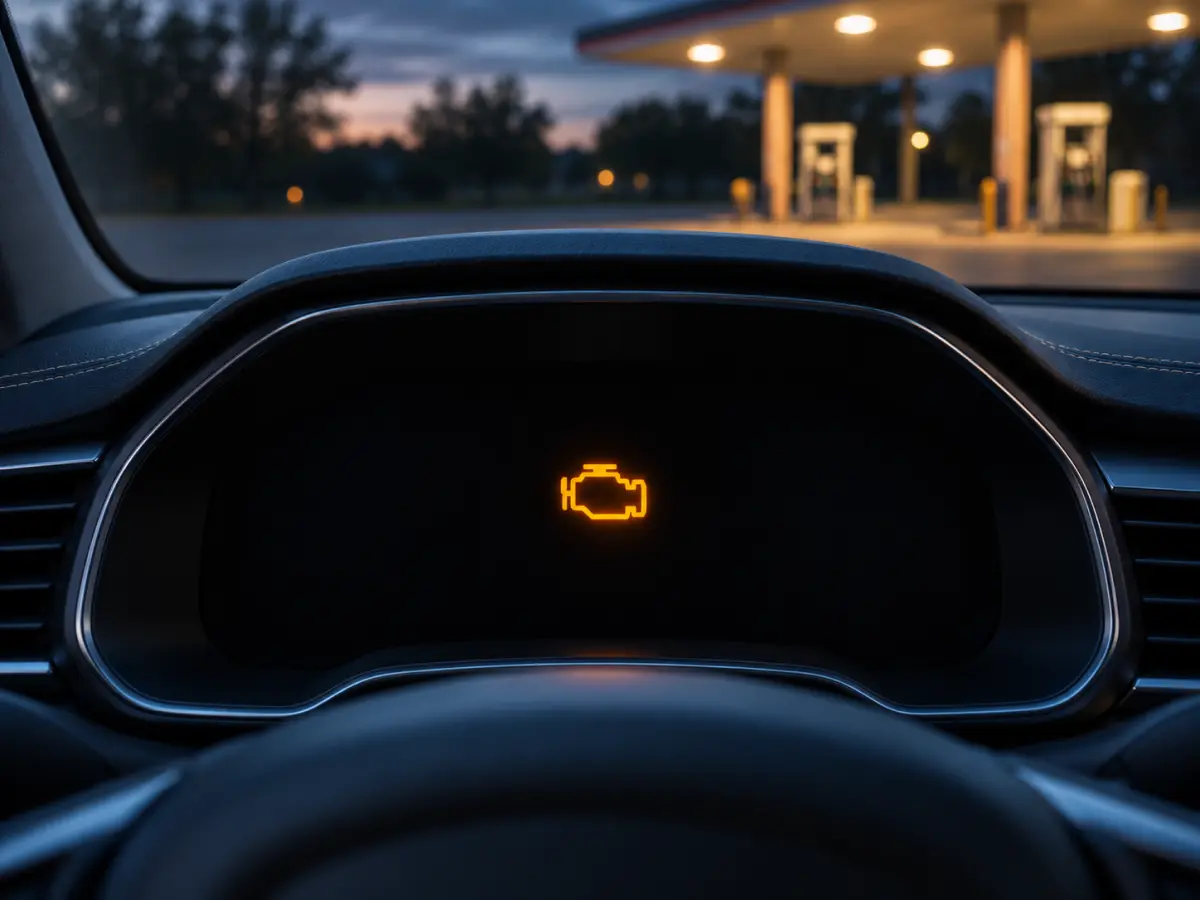
In short: if the Check Engine light comes on right after refuelling and the engine runs smoothly, the most common culprit is a loose or damaged fuel cap. The engine control unit detects a fuel vapour leak in the EVAP system and turns on the light. If the light is flashing, the engine shakes or loses power, the problem is likely poor fuel quality or misfires, and you should not keep driving under load.
What the Check Engine light means and why it reacts to refuelling
Check Engine is the warning light of the engine’s on-board diagnostic system (OBD-II). It comes on when the control unit detects a deviation in the operation of the engine, fuel system, ignition or emissions control system and stores a fault code.
The link with refuelling comes from two systems. The first is the EVAP fuel vapour recovery system: it is sealed, and the control unit regularly tests it for leaks. An open fuel cap looks like a leak to this system. The second is fuel delivery and combustion: poor-quality fuel or water in it disrupts the air-fuel mixture, and the control unit records misfires or a lean mixture.
Steady or flashing: what to do first
| How the light behaves | What it usually means | What to do |
| Steady, engine runs smoothly | Non-critical fault, often EVAP | Check the cap, book diagnostics within the next few days |
| Steady, engine shakes or pulls worse | Misfires, fuel or mixture problem | Drive gently, without load, get diagnostics as soon as possible |
| Flashing | Severe misfires | Reduce load, stop in a safe place; then a tow truck or very careful driving to a service center |
| On together with the oil pressure or overheating light | A separate fault not related to fuel | Switch off the engine |
A flashing light is the most serious signal. With severe misfires, unburned fuel enters the exhaust system and overheats the catalytic converter, and replacing it costs much more than fixing the root cause.
The most common causes of Check Engine after refuelling
Fuel cap
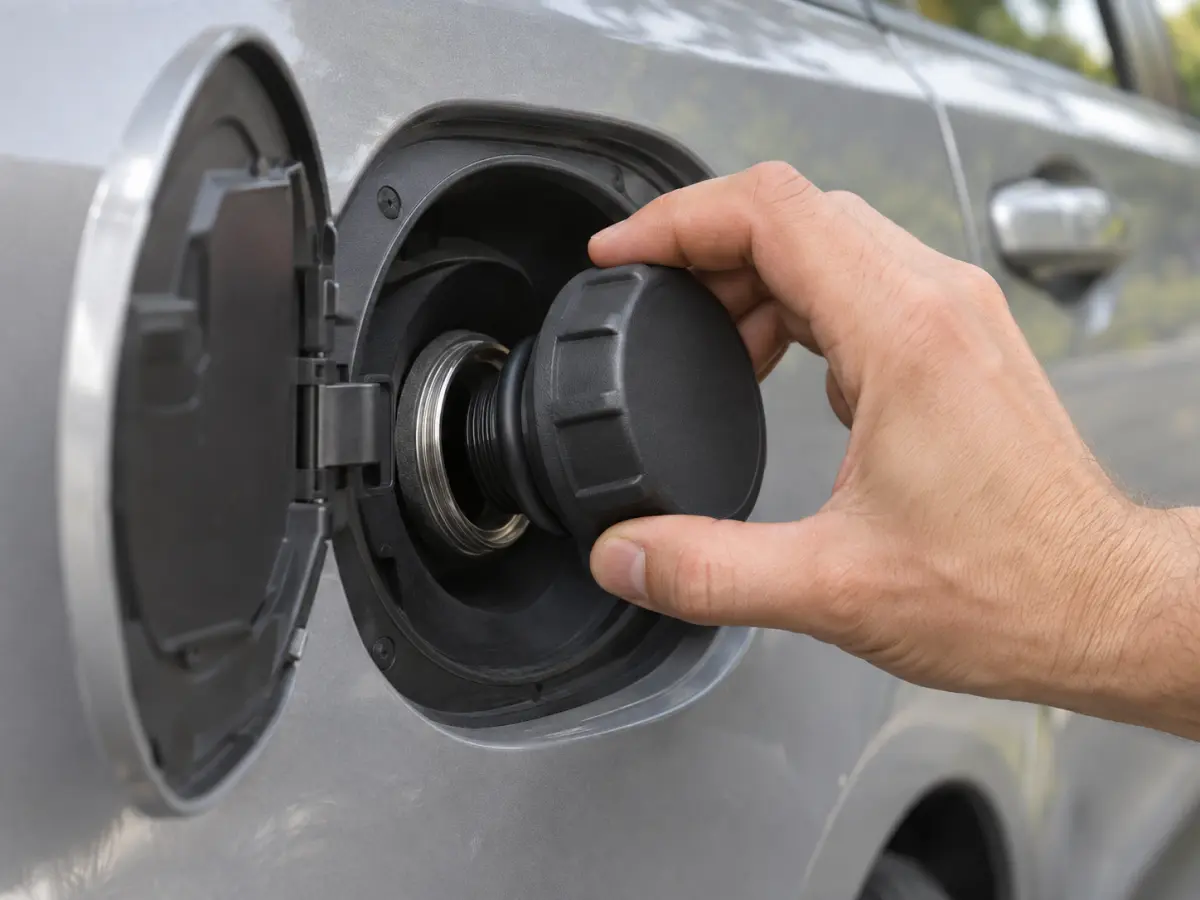
This is the most common and cheapest cause. The cap was not tightened until it clicked, the edge of the seal got pinched, the cap is old with a cracked seal, or a non-original cap that doesn’t seal properly has been fitted. The control unit usually stores codes P0455, P0456 or P0457.
Overfilling the tank after the nozzle clicks off
When fuel is topped up after the automatic shut-off, liquid petrol can get into the charcoal canister — a container of activated carbon that is meant to absorb only vapours. A soaked canister and the purge valve start working incorrectly. Typical signs: hard starting right after refuelling, rough idle, a smell of petrol, codes P0441 or P0496.
Poor-quality fuel or water in it
If the problem appeared after filling up at a new or questionable petrol station and the engine started running rough, the fuel is the main suspect. Water, contaminants or an unsuitable composition cause misfires (P0300–P0304, etc.) or a lean mixture (P0171, P0174). On diesel cars, injectors and the high-pressure fuel pump are the first to suffer from water and low-quality fuel; fuel rail pressure faults are possible (for example, P0087).
Wrong fuel
Petrol in a diesel car or diesel in a petrol car is a separate case. If the mistake is noticed at the station, do not start the engine. If you are already driving and the car starts jerking, switch off the engine and call a tow truck: the fuel must be drained and the system flushed.
Coincidence
Sometimes the light comes on after refuelling by chance. For example, some control units run the EVAP test only at a certain fuel level, so an old leak in hoses or valves shows up right after refuelling. The cause may also be an oxygen sensor or another component unrelated to fuel. Only the fault code can tell them apart.
Fault codes that most often appear after refuelling
| Code | What it means | Typical cause after refuelling |
| P0455 | Large EVAP system leak | Cap not closed or missing |
| P0456 | Very small EVAP system leak | Worn cap seal, hairline cracks in hoses |
| P0457 | EVAP leak, fuel cap loose/off (on some makes) | Cap not fully tightened |
| P0441 | Incorrect EVAP purge flow | Purge valve, canister after overfilling |
| P0496 | EVAP high purge flow | Purge valve stuck open |
| P0300–P0304 | Misfires: random or in a specific cylinder | Poor fuel, water; also spark plugs or coils |
| P0171 / P0174 | Lean mixture | Fuel, air leak, fuel pressure |
How a code is interpreted depends on the make and model. A code shows the system in which a deviation was found, but not always the specific part, so replacing a part based on the code alone without testing often doesn’t help.
Diagnostic steps: from simple to complex
- Assess the situation: is the light steady or flashing, has the engine’s behaviour changed, is there a smell of fuel.
- Check the fuel cap: remove it, inspect the seal and tighten it until it clicks several times.
- If the engine runs smoothly, don’t clear the fault by disconnecting the battery. This erases data that helps find the cause, and the light will come back if the fault is still there.
- Drive for a few days as usual. Once the leak is fixed, the control unit has to complete its self-tests, and the light often goes out by itself — this can take anywhere from a few trips to a week or longer.
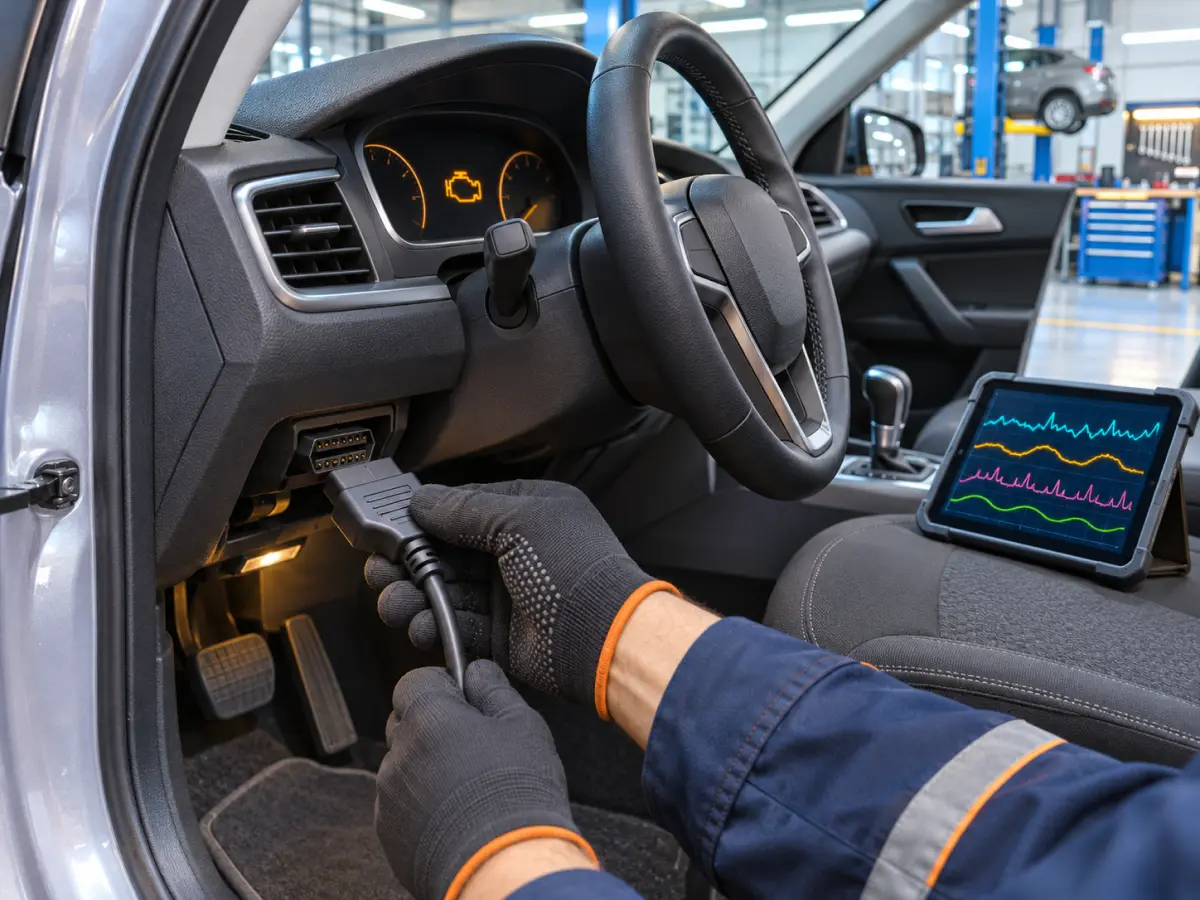
- If the light hasn’t gone out, the engine runs rough or the light is flashing, read the codes with a scanner together with the freeze frame — the engine parameters at the moment the fault occurred.
- Check the system the code points to. For EVAP, that means the cap, filler neck, hoses, purge valve and canister, and system tightness. For misfires and mixture faults — fuel pressure, injectors, spark plugs, coils and, if the fuel is suspected, a sample from the tank.
- After the repair, the fault is cleared and a test drive confirms that the light doesn’t come back.
What saves the most time is correctly reading the codes and live engine data, not just knowing there is a fault. So if the light doesn’t go out, it is worth getting computer diagnostics for your car rather than replacing parts at random.
What you can do yourself and what you shouldn’t
Safe to do yourself: check and properly tighten the cap, avoid topping up after the shut-off, keep the receipt from the petrol station, read the codes with a basic OBD-II scanner if you have one.
Not recommended: draining fuel or removing fuel lines without a lift and experience — it’s a fire risk; adding “water remover” additives to the tank when you have misfire codes; driving for a long time with a flashing light.
If you suspect poor-quality fuel, keep the receipt and, if possible, don’t add other fuel before diagnostics. A sample from the tank will help confirm the cause.
Diesel cars: what to watch for
On a diesel, Check Engine after refuelling is more often related to fuel quality than to the cap. Water and contaminants quickly damage the injectors and high-pressure pump of a Common Rail system, so with fuel pressure faults, rough running or smoke, you shouldn’t wait for the light to go out by itself.
In such cases you need Common Rail fuel system diagnostics: checking rail pressure, filter condition and injector corrections. The sooner the cause is found, the lower the chance that the fuel equipment will need repair.
Check Engine diagnostics in Lviv
At the Avtopark-Service auto service center in Solonka (60 Kiltseva St., near the southern edge of Lviv), technicians read the fault codes and check the system they point to: EVAP, ignition, fuel delivery. For diesel cars, the fuel equipment is diagnosed separately; according to the price list on the website, computer diagnostics of a diesel engine costs from UAH 1,200 — please confirm the current price when booking.
The service center is open 24/7, so you can come in in the evening after work or right after the light comes on during a trip.
Frequently asked questions
Can I drive if the Check Engine light came on after refuelling?
If the light is steady and the engine runs normally, you can drive to a service center without rushing. If the light is flashing or the engine shakes, keep the load to a minimum and stop driving to avoid damaging the catalytic converter.
How long until the Check Engine light goes out after tightening the cap?
The control unit has to confirm there is no leak, and the EVAP test runs only under certain conditions: after the car has been parked, at a certain temperature and fuel level. So the light may go out after a few trips, or it may stay on for a week or longer. If it hasn’t gone out by then, the leak is probably not in the cap.
Can the Check Engine light come on after filling up with LPG?
Yes. On cars with an LPG system, the cause may be a lean mixture (P0171, P0174) or misfire codes related to the gas equipment calibration or gas quality. Diagnostics start the same way — by reading the codes.
Do I need to replace the fuel cap if an EVAP code appears?
Not right away. First the cap is inspected and tightened properly. If the seal is cracked or the code comes back, the cap is replaced with an original or a quality equivalent. If the code still doesn’t clear after that, the rest of the EVAP system is checked.