
Preparing Your Car for Winter: Complete Checklist from Auto Service Technicians
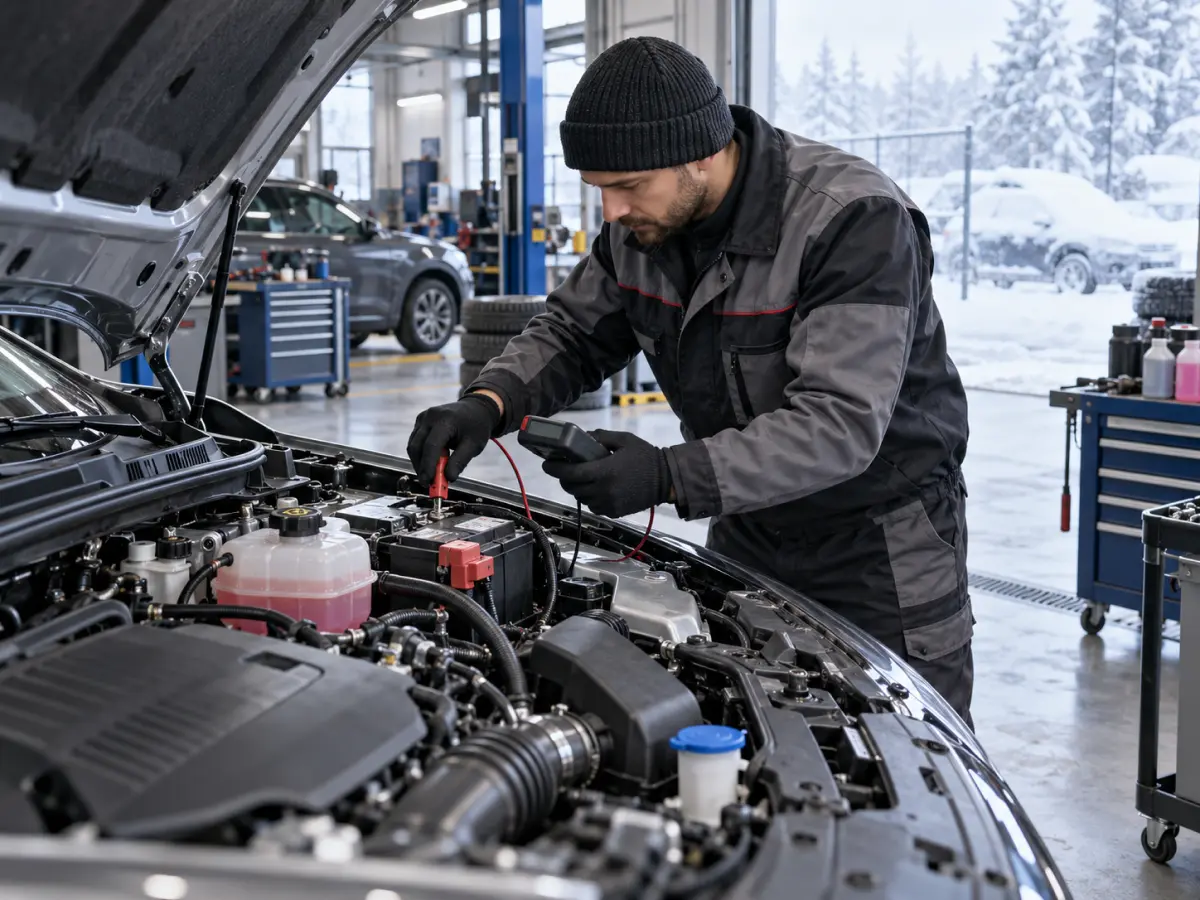
In short: it is best to prepare your car for winter in October, before persistent freezing temperatures begin. The main things to check are the battery and alternator, coolant freezing point, engine oil condition, brakes, tires, windshield wipers, and washer fluid. Owners of diesel vehicles should also check the glow plugs and replace the fuel filter. At a service station, this inspection usually takes 1–2 hours and helps prevent breakdowns during the first severe frost.
When to Prepare Your Car for Winter in Lviv
The best time is October and early November. In Lviv, the first nighttime frosts usually occur as early as October, while snow may appear even earlier on roads toward the Carpathians. If you are planning a trip to Bukovel or Slavske, prepare your vehicle before departure.
Do not wait until the first snowfall. This is when auto service stations and tire shops usually have the longest queues.
Winter Car Preparation Checklist
| What to Check | Recommended Standard | Why It Matters in Winter |
| Battery | 12.6–12.7 V at rest, up to 4–5 years old | Battery capacity decreases in freezing temperatures, while more starting current is required |
| Alternator | 13.8–14.5 V with the engine running | Short trips and heated accessories quickly discharge the battery |
| Coolant | Freezing point of at least −35 °C | Water or old coolant can freeze and damage the radiator |
| Engine oil | Correct manufacturer-approved viscosity, replacement every 7–10 thousand km in city driving | Thick oil makes cold starts more difficult and increases cold-start wear |
| Brake fluid | Replace every 2 years | Brake fluid absorbs moisture, which can reduce braking performance |
| Tires | Tread depth of at least 4 mm, switch at +7 °C | Summer tires harden in cold weather and lose grip |
| Windshield wipers and washer fluid | Wiper blades without damage, winter washer fluid rated to −20 °C or lower | Dirt and road chemicals can reduce visibility within minutes |
| Headlights | Clear and correctly adjusted | It gets dark earlier in winter, while wet asphalt absorbs more light |
| Diesel system | Glow plugs, new fuel filter, winter diesel fuel | Paraffin in diesel fuel can clog the fuel filter at low temperatures |
Battery and Alternator
The battery is the most common reason a car fails to start during the first frost. Check the battery voltage with a multimeter and consider its age. If the battery is more than 4–5 years old, have it tested under load.
The alternator should be able to recharge the battery even in traffic. We explain how to check it yourself in the article car battery dies in winter: how to check the battery and alternator.
Coolant and Cooling System
Check the coolant level with the engine cold and measure its freezing point. At a service station, this can be done with a refractometer in about a minute. If you added water during the summer, the coolant may have become diluted and could freeze at temperatures as high as −10 °C.
If the coolant level keeps dropping, the cause should be identified before freezing weather begins. Read more about the possible causes in the article coolant disappears but there are no visible leaks.
Engine Oil, Timing System, and Engine
In winter, the engine experiences the greatest wear during the first seconds after a cold start. Fresh oil with the correct viscosity reaches all components more quickly. If less than 2 thousand km remain before the next scheduled oil change, it is better to replace the oil now.
If you hear rattling or ticking after a cold start, check the timing chain and hydraulic lifters before freezing weather. These sounds often become louder in cold conditions. Learn more: timing belt or timing chain and hydraulic lifters are ticking.
Special Considerations for Diesel Vehicles
Diesel engines are more vulnerable in winter than petrol engines. Regular diesel fuel becomes cloudy at low temperatures, while paraffin can clog the fuel filter.
- Check the glow plugs and their relay. Even one faulty glow plug can make cold starting more difficult.
- Replace the fuel filter before winter, even if it has not yet reached its mileage limit.
- Use winter or Arctic-grade diesel fuel from trusted fuel stations.
- Add diesel anti-gel before refueling, not after the fuel has already thickened.
At Autopark-Service, we have Bosch-authorized equipment for Common Rail fuel system diagnostics. This allows us to check not only the glow plugs but also the injectors and high-pressure fuel pump. Learn more on the diesel service page.
Tires, Brakes, and Suspension
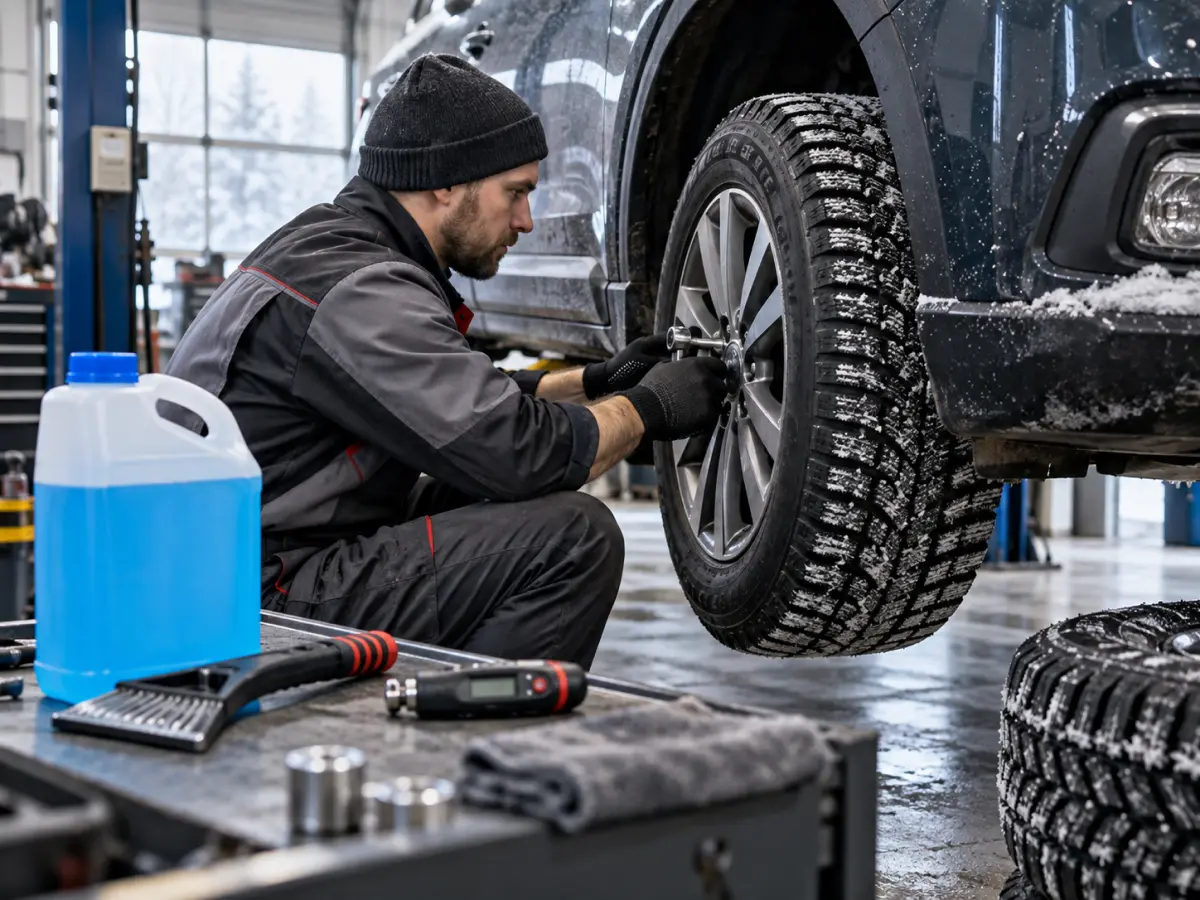
Winter tires should be installed when the average daytime temperature consistently stays below +7 °C. Winter tire tread depth should be at least 4 mm because shallower tread removes snow and slush less effectively. It is also worth checking wheel alignment during a tire change, as summer potholes can alter wheel geometry.
Brake fluid should be replaced every 2 years. It absorbs moisture, and in cold weather braking performance can deteriorate. Also check the condition of the brake pads and discs: on slippery roads, every meter of stopping distance matters.
Windows, Washer Fluid, and Lighting
- Replace the windshield wiper blades if they leave streaks.
- Drain the summer washer fluid and refill with winter fluid rated to −20 °C or lower.
- Check the rear window and mirror heating systems.
- If the headlights have become yellow, polish them. This can restore up to 70–80% of light output if the plastic has not yet cracked.
Interior, Bodywork, and Air Conditioning
In Lviv, roads are treated with de-icing chemicals in winter, which accelerate corrosion. Before winter, it is worth repairing paint chips and treating door seals with silicone to prevent them from freezing.
Do not switch the air conditioner off for the entire winter. Run it for several minutes once a week. This keeps the compressor seals lubricated, while the air conditioning system also helps remove moisture and reduce window fogging.
Complete Winter Car Preparation in Lviv
At Autopark-Service, we can inspect your vehicle for winter during a single visit: battery and alternator, coolant, oil, brakes, suspension, lighting, and fluids. After the inspection, you receive a list showing what should be done immediately and what can wait.
Book a winter inspection for your car: +380 91 481 9004, Lviv, 60 Kiltseva St. We are open 24/7, so you can leave your vehicle in the evening and pick it up in the morning. Learn more on the maintenance and diagnostics page.
Frequently Asked Questions
When Should I Switch from Summer Tires to Winter Tires?
When the average daytime temperature consistently stays below +7 °C. In Lviv, this is usually in late October or early November.
Should I Change the Engine Oil Before Winter?
Yes, if you are close to the scheduled oil change interval. Fresh oil with the correct viscosity makes cold starting easier.
What Winter Washer Fluid Should I Use?
Use washer fluid with a freezing point of −20 °C or lower. For trips to the Carpathians, fluid rated to −30 °C is a better choice.
Should I Warm Up the Engine in Winter?
Usually, 1–2 minutes at idle is sufficient, after which you can begin driving gently without high RPM. We explain this in more detail in the article how to warm up the engine properly in winter.
How Long Does a Winter Vehicle Inspection Take at a Service Station?
Usually 1–2 hours. If fluids or parts need to be replaced, we agree on the scope of work and cost before starting the repair.
Read also: car is difficult to start in winter, importance of timely tire replacement, car filters: when to replace them.